
The Secret to Tender Freshly Milled Sweet Breads
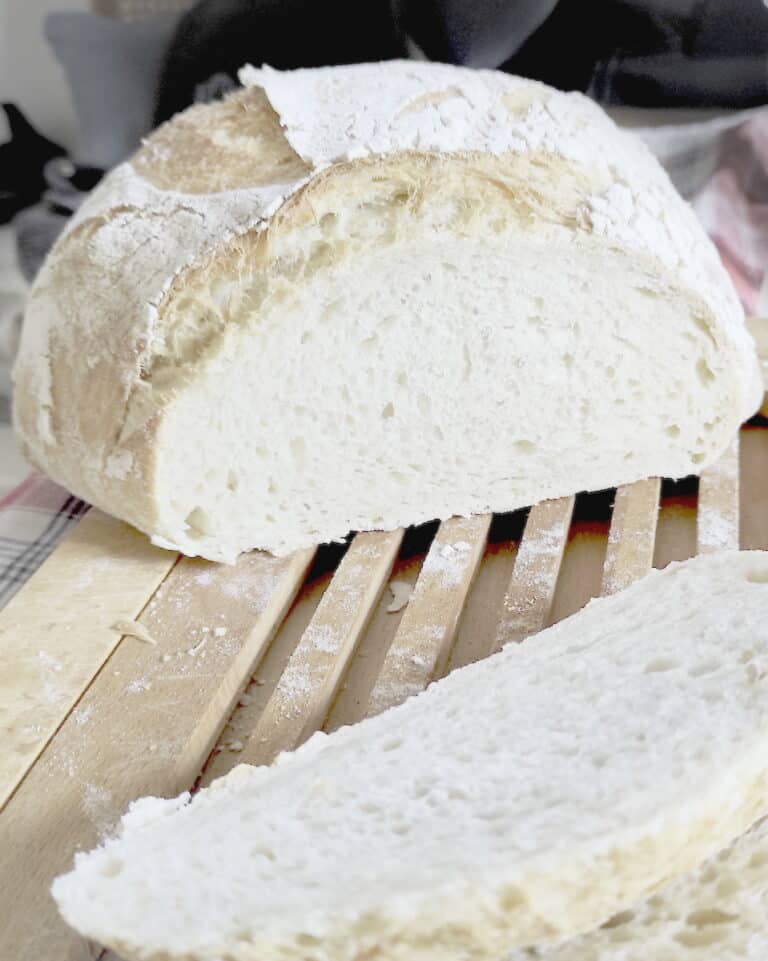
A few years back, tangzhong, the Chinese water-roux method, went viral in the online baking world. The buzz has calmed a bit since then, but trust me—this technique still makes for some of the softest, fluffiest bread that stays fresh for days. And if you’re baking with freshly milled flour, tangzhong is a total game-changer. Wave goodbye to dense, bready cinnamon rolls and brioche. Tangzhong brings back the soft texture we love from white flour, but in a whole grain version.
So, what exactly is tangzhong? It’s pretty simple. You cook a portion of the flour and liquid into a loose paste before adding it to your dough. This simple step helps the bread retain moisture, resulting in a lighter, softer texture.
In this post, we’ll take a look at tangzhong, its Japanese counterpart yudane, how they work, and why it’s a must-try for anyone working with freshly milled flour. Let’s get started!
What is Tangzhong?
Tangzhong is a bread-making technique that involves cooking a portion of flour and liquid (water or milk) into a paste before mixing it into the rest of the dough. The idea is to pre-gelatinize the flour, which allows it to absorb more liquid, creating a pudding-like paste. It helps the dough retain moisture, resulting in a loaf with a lighter, more tender crumb and a longer shelf life.
It also helps with some ancient grains. Spelt is the most widely available ancient grain used in Germany. It binds less water and yields a dryer crumb. Adding a water-roux makes up for that and is sometimes recommended when converting Wheat recipes to use Spelt.
How to Make Tangzhong
Making tangzhong is incredibly simple, and you only need two ingredients: flour and water (or milk). Here’s a quick step-by-step guide to preparing it:
Ingredients:
- 1 part flour
- 5 parts liquid (water or milk)
Steps:
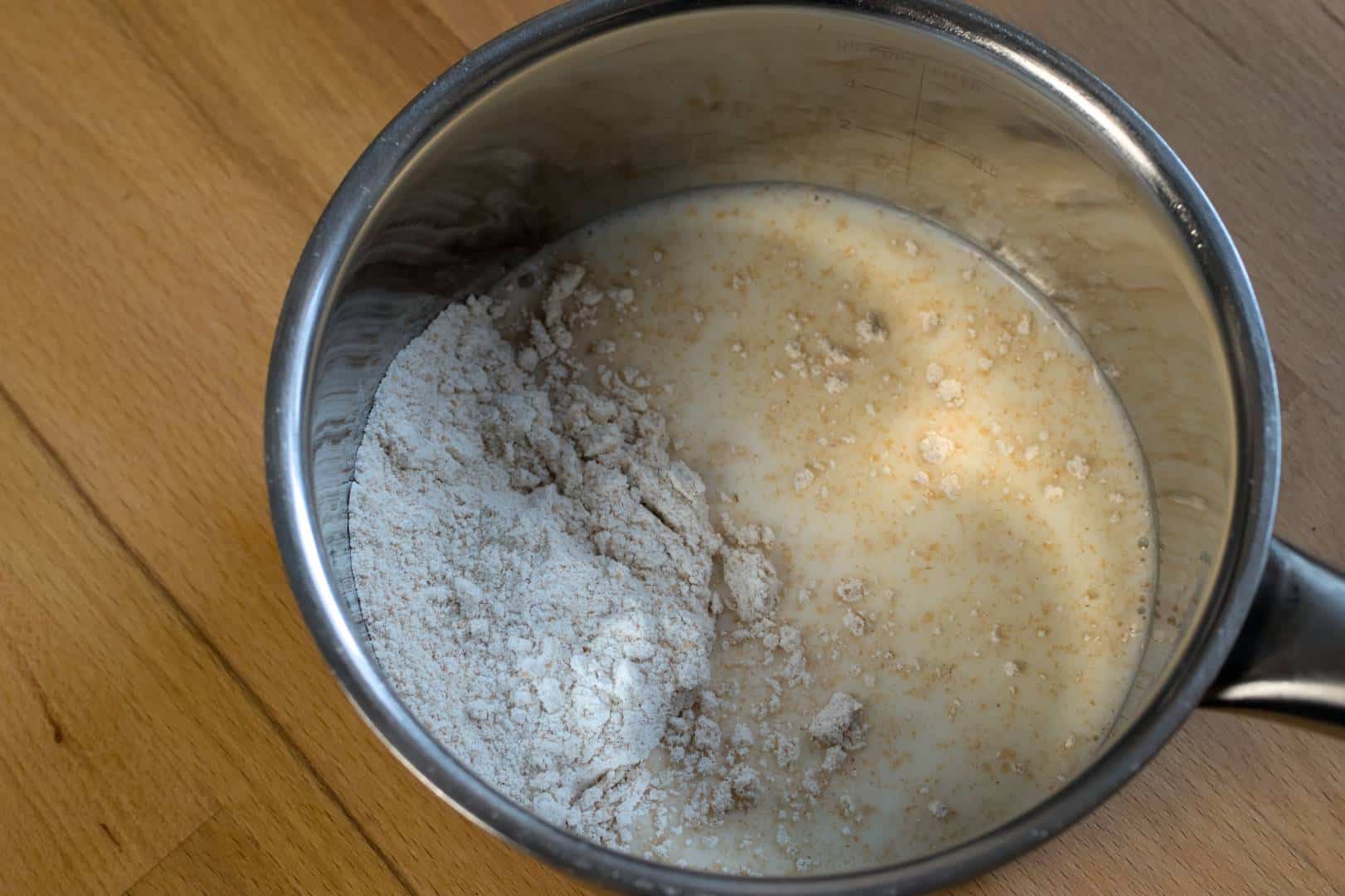
1. In a small saucepan, combine flour and liquid. Whisk together until smooth.
2. Place the saucepan over medium heat, stirring constantly.
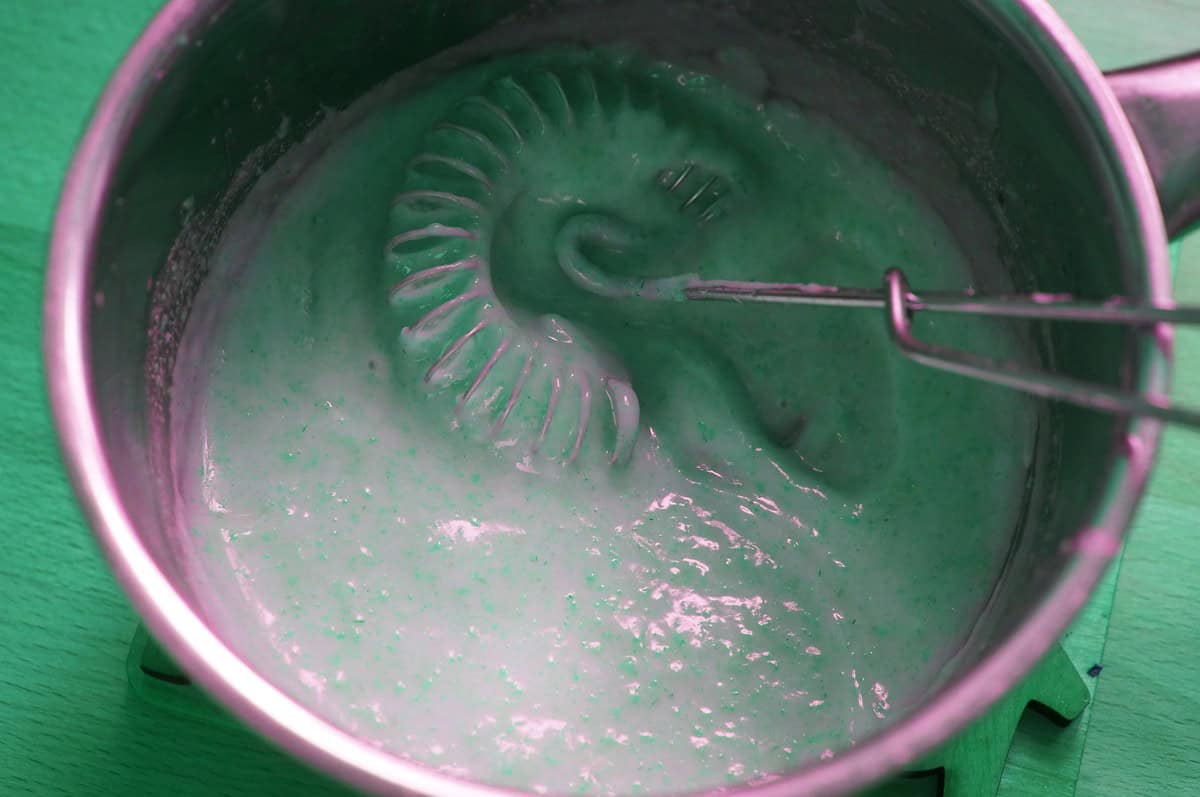
3. Continue cooking until it reaches about 65°C (149°F). The mixture will suddenly thicken and turn into a paste—this is when you know it’s done.
4. Remove from heat and let cool to room temperature before adding it to your bread dough.
Pro Tip: You can store tangzhong in an airtight container in the fridge for up to two days. Just let it come to room temperature before using.
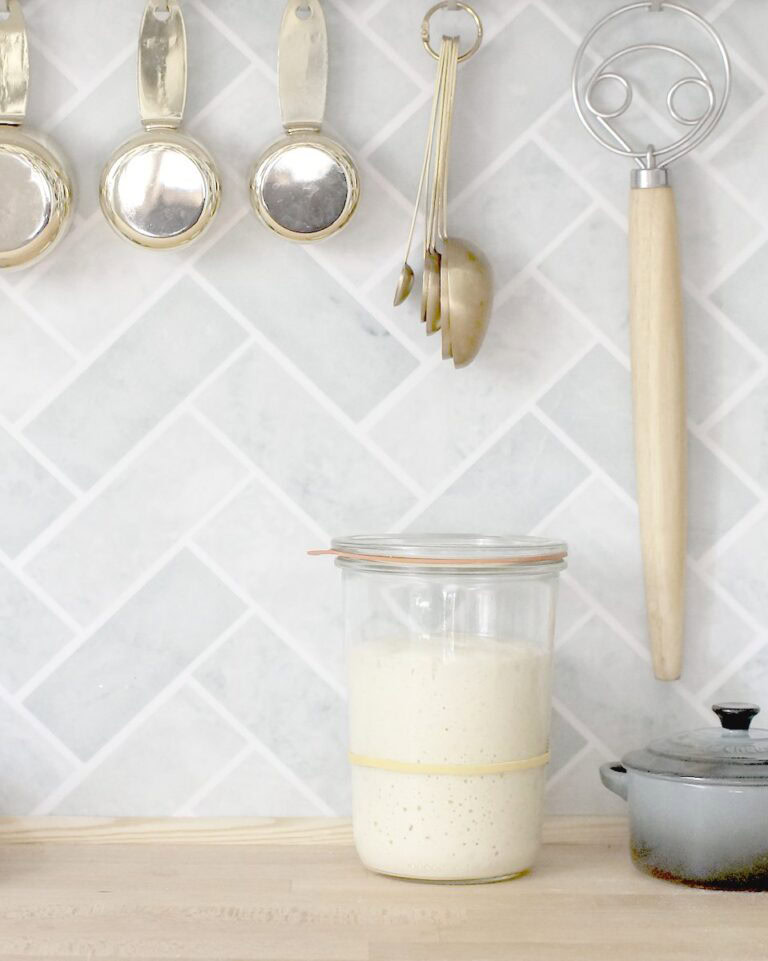
Sourdough discard option: If you keep a sourdough starter, you can use the discard to make tangzhong. Since most starters are half flour and half water, you can add sourdough discard for the flour portion in the tangzhong (more on that below).
How to Use Tangzhong in Any Bread Recipe
Now that you know how to make tangzhong, let’s talk about how to incorporate it into your bread recipes. Typically, you would replace a portion of the flour and liquid in your recipe with the tangzhong paste.
In baker’s percentages, the amount of flour used to make the roux is typically 5% of the total flour weight in the recipe. The remaining 95% of the flour is used as normal in your dough.
For example, if your bread recipe calls for 500 grams of total flour, you’d use 25 grams of that flour for the tangzhong (5%), and the remaining 475 grams would be used for the dough.
Given the 5:1 ratio, you would cook your tangzhong from 25 grams flour and 125 grams water.
If you want to make tangzhong from sourdough discard, you would add 50 grams of discard and 100 grams water, as discard is usually half flour, half water.
The most popular breads to use tangzhong with are soft sandwich loaves, dinner rolls, and sweet breads. The technique works wonders in recipes that aim for a soft, fluffy texture.
Yudane: Another Way to Add Moisture
If you don’t want to go through the extra steps of making tangzhong, there’s a simpler technique called Yudane. It’s essentially a quick water roux, where you simply pour boiling water over the flour, stir it, and let it sit for a few minutes. The process is almost identical to tangzhong, but Yudane doesn’t require the cooking process. It’s a fast and easy way to get similar results, though it works best when using water. If you want to use milk, I prefer the ratios of tangzhong for creating a softer texture and a richer flavor.
The flour-to-water ratio for yudane is typically 1:1, meaning you use equal parts flour and water by weight.
Yudane originated in Japan, while tangzhong is popular in Chinese and Taiwanese baking. They’re simple methods, but yield fantastic results, especially when making bread with refined flour.
Tangzhong and Yudane with Freshly Milled or Whole Grain Flour
If you’ve ever used Tangzhong or Yudane with refined white flour, you know the alchemy that happens: fluffy, pillowy loaves that rise to impressive heights. That’s the magic of the water-roux!
But when it comes to using freshly milled or whole grain flour, things look a little different—but still amazing! The bran and germ in whole grain flour cut through the dough’s gluten strands. That means it won’t rise quite as high or get those long, delicate strands.
However, what you will get is an incredibly tender, melt-in-your-mouth crumb and a soft, flavorful crust that’s still totally irresistible! Whether you’re making cinnamon rolls or a cozy loaf, both methods will help keep that moisture in check, giving you that softness even with all the extra texture.
Common Mistakes to Avoid
While both techniques are easy, there are a few common pitfalls to watch out for:
- Overheating the tangzhong paste: If your tangzhong gets too thick or starts to burn, it won’t work properly. The thicker it gets, the more moisture evaporates, so you’ll need to add more water to compensate.
- Not cooling tangzhong and yudane properly: Adding them while still hot can throw off the dough’s temperature and affect both fermentation and gluten formation.
- Incorrect ratios: Make sure to stick to the right flour-to-liquid ratio to achieve the correct consistency.
Recipes using tangzhong and freshly milled flour
Try some of my favorite tangzhong recipes!
- Freshly Milled Spelt Brioche Bunnies – Soft and Fluffy
- Freshly Milled Cinnamon Rolls – Sourdough Discard Option
Whether you’re a seasoned baker or just starting out, incorporating tangzhong or Yudane into your bread recipes is a simple way to make sure your whole grain and freshly milled flour loaves come out soft, light, and delicious. These techniques will also help your bread stay fresh longer, all while enhancing the flavor and texture.
I hope this post encourages you to try tangzhong or yudane in your own baking. The tender, flavorful results are definitely worth it! Don’t forget to share your experiences, tips, or questions in the comments below—I love hearing how your loaves turn out. Happy baking!


One Comment