Baking Sourdough Without Bread Flour: A Soft Wheat Guide for Europe & Beyond
So you want to bake beautiful sourdough—but you’re not working with high-gluten bread flour.
Maybe you’re baking in Europe or Australia, where hard red wheat isn’t available. Maybe your local flour is labeled “plain” or “all-purpose” and behaves nothing like the bread flour used in U.S. tutorials. Or maybe you’ve just realized that high protein doesn’t always mean strong, elastic gluten.
This guide is for you.

Soft wheat isn’t known for towering boules with open crumbs and dramatic oven spring. Depending on who you ask, it’s even considered unsuitable for bread baking. And yes, if you’re aiming for lofty artisan loaves, soft wheat won’t get you there on its own.
But that’s only part of the story.
There’s no reason the whole world should eat the same kind of bread. This guide celebrates soft wheat for what it is—not what it isn’t.
What Is Soft Wheat?
Soft wheat is a type of wheat with lower gluten-forming potential than hard wheat. It contains fewer of the specific proteins that create strong, stretchy gluten networks—making it naturally softer and more tender in baked goods.
In much of Europe, soft wheat is just wheat. It’s the default. Flours labeled all-purpose, plain or even bread flour often contain only soft wheat or a soft-hard blend.
To complicate things further, outside North America, “hard wheat” usually refers to durum wheat—a high-protein, but non-elastic wheat used for pasta, not bread. (Ask me how I know. Ask me why there’s 10 kilos of it sitting in my pantry…)
Outside North America, high-gluten bread flour isn’t common—most people don’t even have access to it. So if you’ve been baking with European flours and wondering why your loaves don’t behave like American sourdough tutorials say they should—this is why.
But don’t worry—bakers in France, Germany, and beyond have been making incredible bread with soft wheat for centuries. You don’t need North American flour to bake great sourdough. You just need to work with what you’ve got—and understand how it behaves.
for U.S. home millers and fresh flour enthusiasts:
This guide focuses on refined white soft wheat flour, the kind commonly found in Europe (and beyond). If you’re milling your own soft wheat at home—especially in the U.S.—note that the flour’s characteristics can differ, and you may need to adjust your approach. For more tailored tips, check out my Fresh Flour Baking Guide.
Why Soft Wheat?
Soft wheat makes bread with a tender crumb and a chewy crust—comforting and familiar, even if it looks a little different from what you see on social media. It’s the standard in much of the world, not an exception and definitely not a “lesser” flour.
Breads made with soft wheat often focus more on rich flavor and texture than on huge, airy holes. The dough is easier to handle, with less risk of becoming tough, making it great for home bakers. It’s also versatile, working well for breads, pastries, and blends with whole grains or fresh-milled flour. Baking with soft wheat means embracing a gentler approach to gluten development and hydration to bring out the best in your dough.
And the flip side? Maybe us low-gluten bakers have to work a little smarter to develop a decent dough—but we can also mix our cake batters all day long and never risk tough cake. You win some, you lose some.
If you’re using freshly milled flour, that comes with a different set of quirks—check out my guide to baking with fresh flour for tips on absorption, oxidation, and structure.
Sourdough With Weaker Gluten: Why The Flour You Use Matters
There are three key factors that determine the success of any sourdough bread:
- Finding the right hydration
- Getting fermentation times right
- Proper gluten development
Different flours affect all three—dramatically. But once you know what to look for, it becomes second nature. Every loaf you bake will teach you something.
I recently found myself in an Airbnb kitchen with absolutely nothing to bake sourdough with: no stand mixer, banneton, Dutch oven—not even a loaf pan! And yet, I still managed to make a pretty decent loaf of sourdough bread—from German cake flour, no less! For those who don’t know, German cake flour is as low-gluten as wheat gets. The key is knowing how to handle it! Proof that you can make bread from almost anything, even the softest, most unlikely flour.


Hydration
Gluten development starts with water. But not all flours absorb water the same way—and soft wheat, in particular, tends to need less than strong bread flours.
If you add too much water, a soft wheat dough can become loose, sticky, and difficult to shape. Add too little, and you risk a dry, dense loaf. You’re looking for the sweet spot: enough water to hydrate and strengthen the gluten, but not so much that your dough can’t support itself.
Here’s a loose guide to moderate hydration levels for sourdough, depending on the type of flour. If you add water beyond that, you’ll be working with a high hydration dough. (Which can still work—it just follows a different set of rules than what we’re covering in this guide.)
Bread Flour (US)
Wheat Type: Hard wheat, strong gluten
Recommended Hydration: 70-85%
All Purpose Flour (US)
Wheat Type: Varies depending on brand, usually a blend of hard and soft wheat
Recommended Hydration: 70-80%
Strong Bread Flour (UK)
Wheat Type: Hard Wheat, often slightly less absorbent than US
Recommended Hydration: 68-80%
All-Purpose Flour (Europe)
Wheat Type: Usually soft wheat, lower gluten
Recommended Hydration: 65-75%
How Do I Know If My Dough Is Properly Hydrated?
Every flour behaves differently, so these hydration ranges are starting points—not rules. A few ways to check if your dough is in a good place:
- Smooth, slightly tacky texture: The dough should feel hydrated and soft, but not wet or sticky like batter.
- Windowpane test: Stretch a bit of dough gently. If it thins to a translucent sheet without tearing, you’re close.
- Shaping feel: If the dough holds shape without oozing across your counter, it’s likely well-balanced. If it puddles or collapses, it’s probably overhydrated (or not fully developed).
Remember, these are guidelines—you’ll learn your flour’s behavior over time.
Fermentation
Once your dough is mixed and properly hydrated, fermentation begins—and timing matters. This is where flavor, rise, and structure develop. With soft wheat (or other low-gluten grains), fermentation behaves a little differently.
Because these grains form weaker gluten networks, the dough can’t trap gas as efficiently—and it can’t hold its structure for as long. That means your fermentation window is narrower: dough can go from underfermented to overfermented more quickly than with high-gluten bread flour.
- Use a bowl that fits the dough: If your dough is swimming in a huge mixing bowl, it’s almost impossible to tell if it has doubled. For better visibility, transfer the dough to a smaller bowl or clear container after kneading.
- Focus on the dough’s shape, not just its size: A fully fermented dough will look puffed and gently domed. If the top flattens out or spreads sideways, it’s probably gone too far. Soft wheat doughs are more prone to losing shape if fermented past their peak.
- Don’t wait too long: When in doubt, err on the side of shaping a little early than too late. The dough will continue fermenting during its final proof in the banneton or loaf pan, preserving more strength and improving oven spring.
Can You Rescue Overfermented Dough?
Absolutely! Overfermentation happens to everyone.
If your dough feels wet, slack, or floppy and seems impossible to shape:
- Roll it up gently—don’t worry about perfect structure.
- Place it into a well-greased loaf pan.
- Let it rise just to the top of the pan.
- Bake as usual.
You may not get a dramatic (or any kind of) oven spring, but you’ll still have a flavorful, naturally leavened loaf—and that’s always worth it!
Developing Proper Strength in Low-Gluten Grains
When you’re working with soft wheat (or other lower-gluten grains), your dough starts with less gluten-forming potential than conventional bread flour. That doesn’t mean you can’t build a strong loaf—it just means you have to help it along with a bit more intention.
Two things develop gluten:
- Agitation (kneading)
- Time (fermentation, rest periods)


Kneading
Kneading physically develops gluten by aligning and strengthening the protein strands, building the dough’s structure. With soft wheat, the gluten network is naturally weaker, so kneading needs a thoughtful approach.
For White Soft Wheat Flour:
If you’re using sifted or refined soft wheat flour (like most European all-purpose flours), gluten is low, but you can build enough strength with gentle methods like:
- Stretch-and-folds during bulk fermentation
- A gentle slap-and-fold or coil-fold method
- Even no-knead approaches, if the hydration is right
You can also use a stand mixer if you prefer—just keep it on the lowest speed and limit mixing to under 10 minutes to avoid overworking the dough.
The goal is to encourage gluten development without overworking the delicate dough.
For Whole Soft Wheat Flour:
When baking with the whole grain—including bran and germ—you’ll need more early kneading. Bran particles weaken gluten strands over time, especially during long fermentations.
So: knead early and knead well.
That might look like:
- A few minutes in a stand mixer until the dough feels elastic
- A brisk 5–10 minute hand knead before bulk fermentation
This early kneading helps the dough maintain strength during fermentation, preventing it from breaking down into a sticky mess.
If you prefer to minimize kneading, compensate by extending fermentation times to allow gluten to develop gradually.
Extended Fermentation for Strength
If you prefer not to knead much, you’ll need to extend your fermentation time to compensate:
- Use a small amount of starter (2–3%)
- Let the dough ferment at room temperature for up to 16–20 hours
- Watch closely: as long as the dough holds its dome and doesn’t spread flat, it’s still in a good place
Shaping
Shaping with low-gluten dough isn’t dramatically different, but it does require a bit more finesse.
- Skip pre-shaping: Since the gluten structure doesn’t get as tight during bulk fermentation, there’s no need to relax it before final shaping.
- Handle gently: Soft wheat doughs are more fragile, so be careful to avoid deflating the gas bubbles.
- Focus on building surface tension: Gently fold and drag the dough against your work surface.
- Avoid gluten damage: Stop shaping as soon as you notice tiny surface tears or rough patches—these are signs the gluten is at its limit.

Baking Your Soft Wheat Loaf
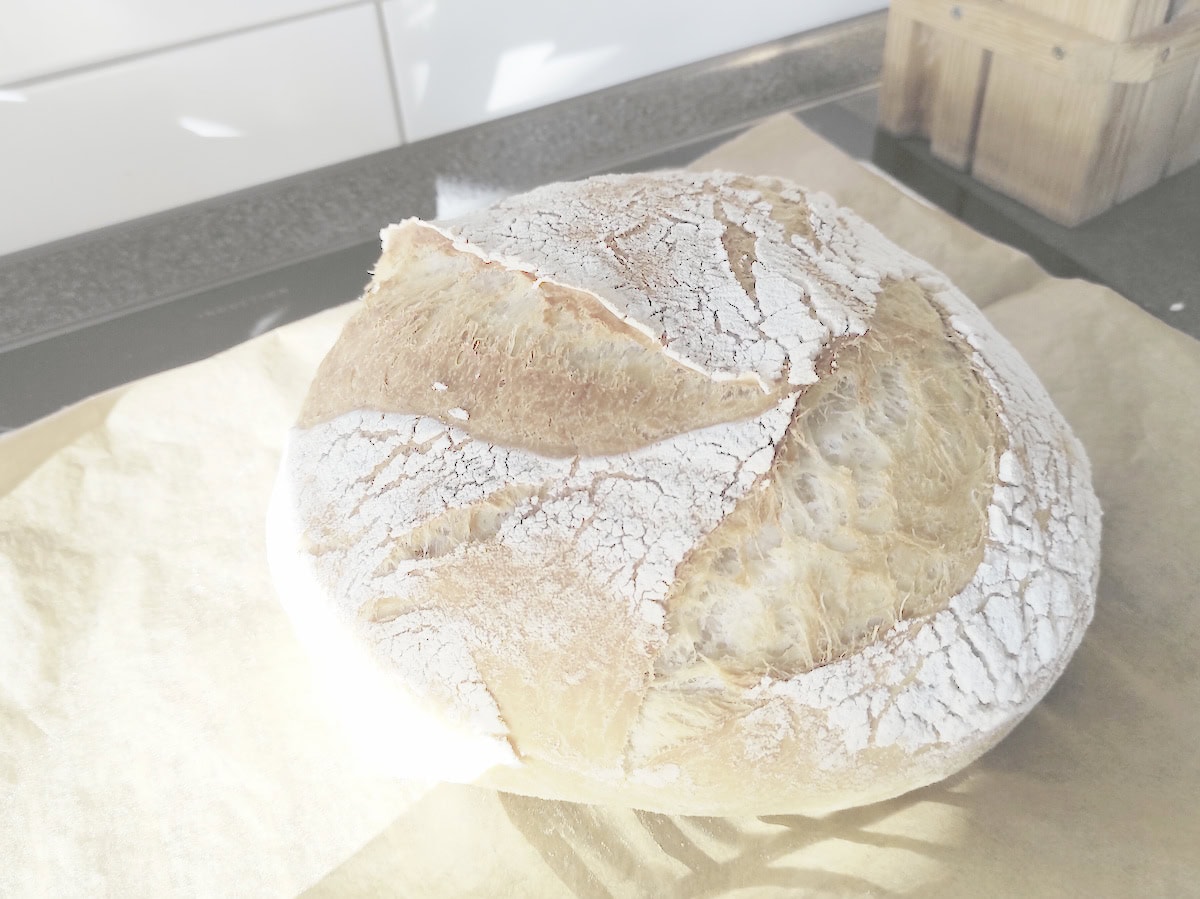
Baking with soft wheat doesn’t require too many changes to your usual routine, but here are a few things to keep in mind:
FAQs on Baking Sourdough Without Bread Flour
Ready to try baking with soft wheat?
Grab a bag of your local flour and don’t worry if it’s “bread flour” or not. Use the guide above, trust your hands, and see what happens. I’d love to hear how it turns out—share your bake in the comments and let me know how soft wheat is rising to the occasion in your kitchen!