
Easy Soft Wheat & Einkorn Sourdough Sandwich Bread
This soft sourdough sandwich bread with fresh milled soft wheat & einkorn flour is delicious, easy to handle, and perfect for beginner bakers.
This post may contain affiliate links. As an Amazon Associate, I may earn a small commission from qualifying purchases at no extra cost to you.

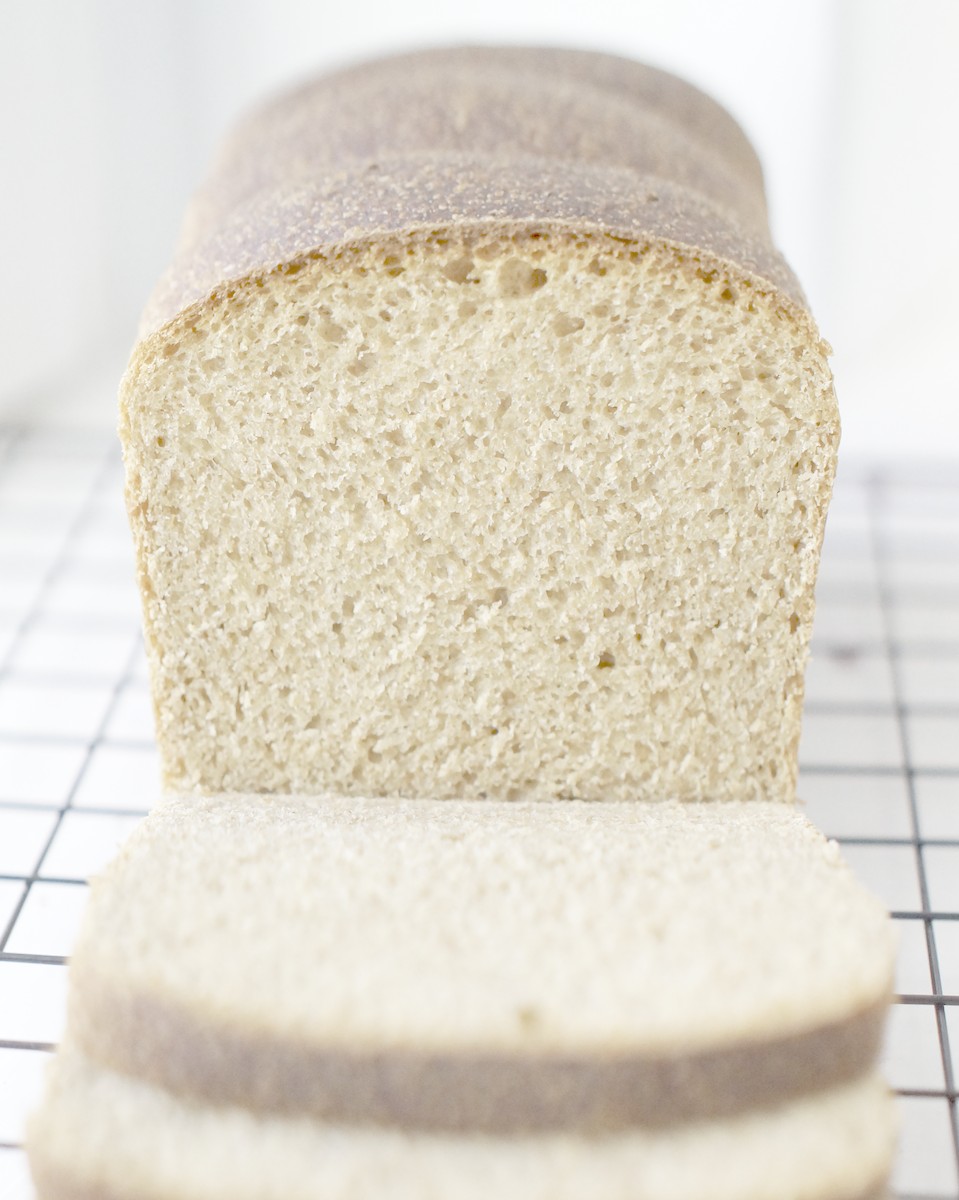
This is the easiest fresh milled sourdough sandwich bread recipe if you’re new to baking with soft wheat or lower gluten ancient grains.
With a soft crumb and a touch of natural sweetness, this recipe is a reliable formula that combines the rich flavors of einkorn and soft wheat to create a smooth dough that’s easy to work with.
Whether you’re new to sourdough baking or simply looking for a flavorful, homemade bread, this freshly milled soft wheat and einkorn sourdough sandwich bread is a wonderfully easy gateway recipe into the world of lower gluten baking.
Toast it for breakfast or use it for your favorite sandwiches. It’s a solid base for any occasion!
Yes, you can make bread with soft wheat!
Fresh-milled soft wheat makes incredible sourdough bread. Once you know how it likes to be handled, it produces beautiful, flavourful loaves.
Explore more fresh-milled soft wheat sourdough recipes:
Why You’ll Love This Recipe

Ingredients & Substitutions
Freshly milled soft wheat flour: I use a German heritage yellow soft wheat variety, milled on the finest setting of my mill. Use either soft white or soft red wheat in North America.
If you don’t mill your own flour at home (yet), a whole wheat pastry flour with at least 10% protein is the closest match in the North America. In most European countries, any regular whole wheat flour can be used.
Freshly milled einkorn flour: Einkorn is an ancient grain with a fantastic flavor that really stands out! It tastes sweet and nutty, almost like almonds. Use freshly milled einkorn flour for best flavor and nutrition, or store-bought whole grain einkorn flour if you don’t mill at home.
Milk: Using whole milk makes for a tender crust and soft crumb. Substitute any whole milk style kind of plant milk or soy milk if you’re dairy-free.
Butter: Dough enriched with butter has a tender crumb but more importantly: it’s the ingredient that turns bread into toast. When heated, the fat fries the crumb and the result is a beautiful golden crusty slice of toast! Butter usually has a fat content between 80 and 90%, depending on where you live. Aim for a high fat content when choosing a dairy-free alternative (no “light” products) or use a neutral coconut oil instead.
Sourdough starter: Sourdough starter is a colony of wild yeast and bacteria. The wild yeast in sourdough work more slowly than commercial yeast, giving the beneficial bacteria the time to “pre-digest” the grains. The result is a gut healthy, easy to digest bread with a complex flavor you will never want to miss out on again. Make sure your starter is active and bubbly for best results.
Honey A small amount of honey adds a subtle sweetness and adds extra moisture. You can replace with sugar, brown sugar or maple syrup for a vegan alternative. It won’t make the bread sweet, but mostly serves as food for the wild yeast and bacteria.
Tools You May Need
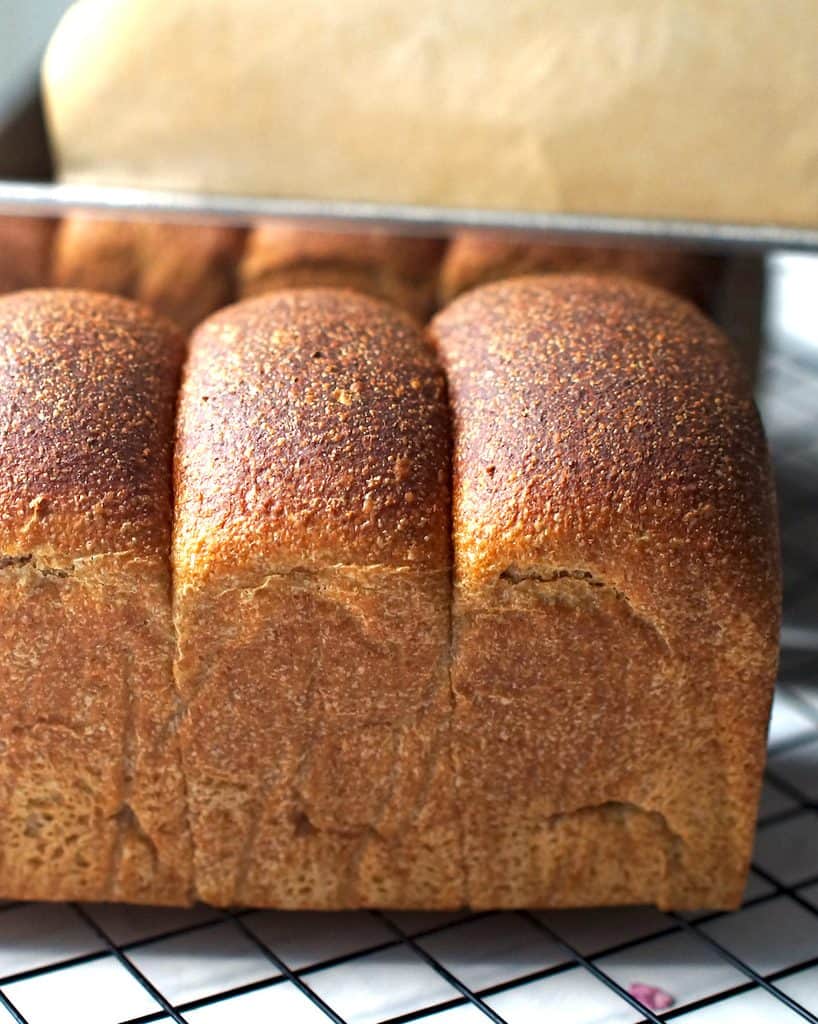
Standard bread loaf pan: I use a special bread loaf pan that has higher sides and a lid. All it does is give your bread a straight or even a square slice if you bake with the lid on. A standard loaf pan works fine too, though, and you’ll get the iconic mushroom-shaped slice.
Danish dough whisk: Totally optional, but I love the mess-free convenience when baking without a stand mixer.
Bench scraper (optional): A bench scraper helps with dividing dough neatly.
Stand mixer (optional): A stand mixer makes kneading easier and faster, helping to develop the dough’s gluten more efficiently.
Baking Timelines
|
Feed your starter the night before so it’s active and bubbly in the morning. |
|
|
08:00 AM |
Mill your grains and mix all ingredients into a shaggy dough. |
|
08:30 AM |
Knead the dough and bulk ferment at room temperature. |
|
02:30 PM |
Shape the dough and place in a loaf pan. Cover and proof at room temperature. |
|
08:30 PM |
Bake whole wheat and Einkorn sourdough sandwich bread and leave to cool. |
|
Feed your starter during the day so it’s active and bubbly at night. |
|
|
10:00 pM |
Mill your grains and mix all ingredients into a shaggy dough. |
|
10:30 pM |
Knead the dough and bulk ferment at room temperature. |
|
07:00 aM |
Shape the dough and place in a loaf pan. Cover and proof at room temperature. |
|
12:00 aM |
Bake whole wheat and Einkorn sourdough sandwich bread and leave to cool. |
How to Make Freshly Milled Soft Wheat & Einkorn Sourdough Sandwich Bread (Step-by-Step)
Step 01
Mill wheat & einkorn
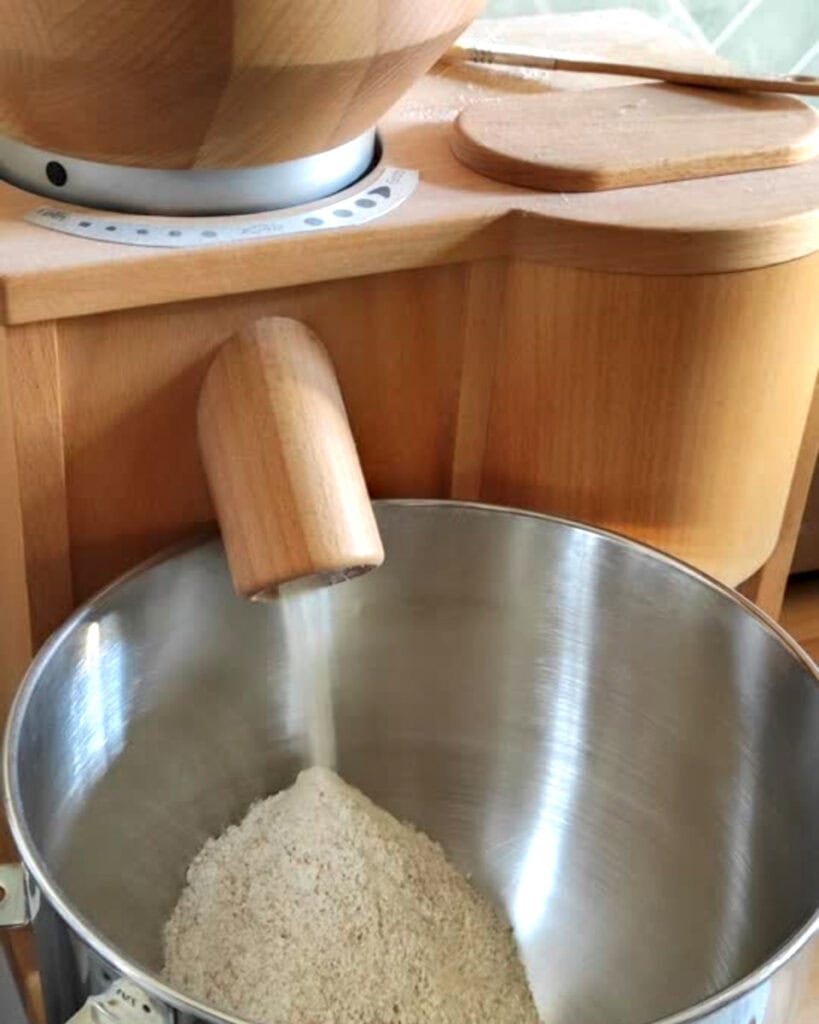
Weigh out whole soft wheat and einkorn berries and grind them on the finest setting of your grain mill.
Step 02
Mix & rest

In the meantime, combine milk, salt, honey, butter, and sourdough starter in the bowl of a stand mixer. Add the flour and use the paddle attachment to bring everything together into a shaggy dough, with no dry pockets hiding on the bottom of the bowl.
Cover and rest for 30 minutes. to hydrate the flour properly.
Step 03
Knead & Bulk Ferment

Switch to the dough hook and knead until the dough cleans the side of the bowl, is smooth, elastic, and passes the window pane test.
Cover the bowl, and bulk ferment for 4-8 hours, or until domed, puffy, and nearly doubled in size.
Step 04
Shape

Grease a bread loaf pan and line with parchment paper for easy removal.
Divide the dough into four equal pieces. Gently flatten each piece into a rectangle. Roll up from the short side, gently pulling on the dough to create tension. Rotate 90° and roll up from the short side again.
Step 05
Proof

Place the dough sections side by side into the loaf pan. Cover the pan and proof until the dough fills the entire pan. This may take anywhere between 6 to 10 hours, depending on the strength of your starter and the temperature of your kitchen.
Step 06
Bake & cool
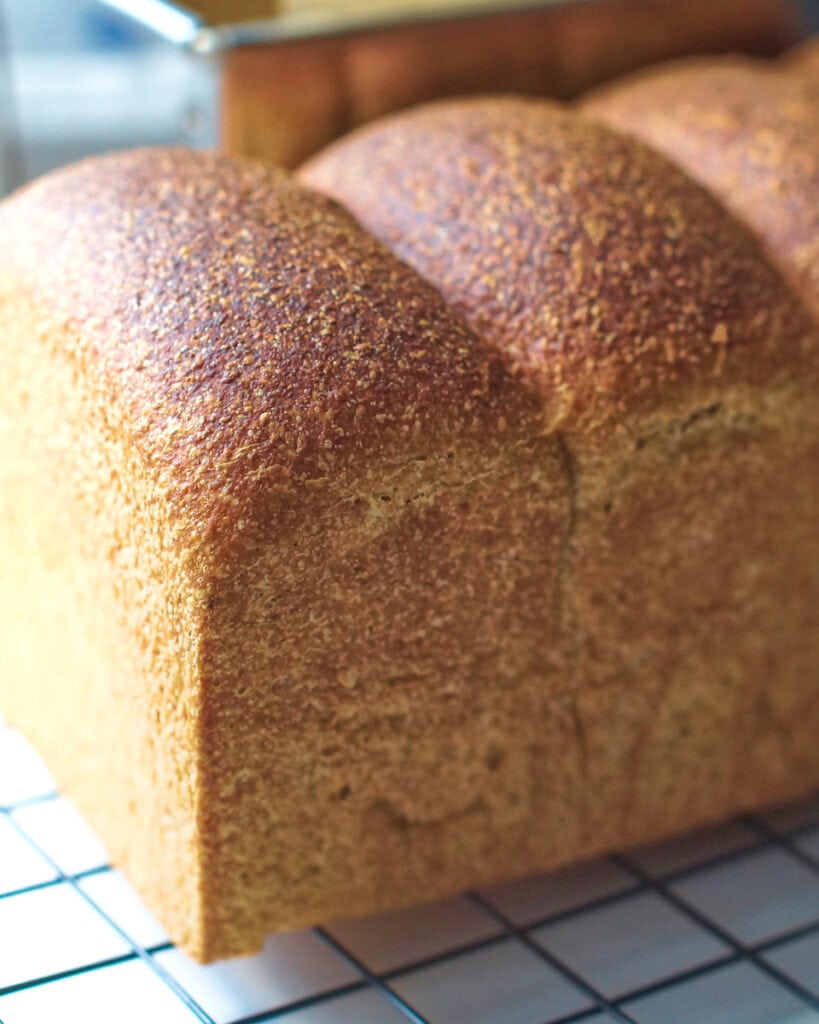
Preheat the oven to 230°C (445°F). Place the risen loaf on the lowest rack and drop the temperature to 200°C (395°F). Bake for 15 minutes, then drop the temperature to 180°C (355°F). Bake for another 45 minutes.
Turn the bread out to a wire rack to cool completely.
Tips & Troubleshooting
How to Serve
How to Store & Freeze
Store the bread in a freezer bag to keep the crust and crumb soft for up to 3-4 days. If your loaf pan comes with a lid you could also store it in there or any other airtight container.
Sandwich bread also freezes well, both sliced or whole! Freezing slices individually makes it easier to toast without needing to thaw the entire loaf. Wrap the bread tightly in a plastic freezer bag, removing as much air as possible. It can be frozen for up to 2 months.
Recipe FAQs
If you make this Freshly Milled Soft Wheat & Einkorn Sourdough Sandwich Bread…

P.S. If you enjoy sourdough sandwich bread, you might love these freshly milled recipes too:
happy baking!
Freshly Milled Soft Wheat & Einkorn Sourdough Sandwich Bread

Equipment
- stand mixer - optional
Ingredients
- 100 g whole grain Einkorn flour - freshly milled
- 400 g whole wheat flour - freshly milled, see Notes
- 10 g salt
- 365 g whole milk
- 100 g sourdough starter - active and bubbly
- 60 g butter - at room temperature
- 30 g honey
Instructions
Mill Flour
- Weigh whole soft wheat and einkorn berries and grind them on the finest setting of your grain mill.
Mix & Rest
- Combine all ingredients in the stand mixer bowl. Use the paddle attachment to mix until a shaggy dough forms, making sure there are no dry flour pockets left. Let the dough rest for 30 minutes to hydrate the flour properly.
Knead
- Switch to the dough hook and knead until the dough cleans the side of the bowl and is smooth and elastic.
Bulk Ferment
- Let the dough rise until it’s nearly doubled in size, anywhere between 4 to 8 hours.
Shape
- Grease a loaf pan and line with parchment paper for easy removal.
- Divide the dough into four equal pieces. Gently flatten each piece into a rectangle. Roll up from the short side, gently pulling on the dough to create tension. Rotate 90° and roll up from the short side again.
- Place each piece in the loaf pan and repeat until the pan is full.
- Cover and proof until the dough fills the entire pan. This may take anywhere between 6 to 10 hours, depending on the strength of your starter and the temperature of your kitchen.
Bake & Cool
- Preheat the oven to 230°C (445°F). Place the loaf pan in the oven and drop the temperature to 200°C (395°F).
- Bake for 15 minutes, then drop the temperature to 180°C (355°F). Bake for another 45 minutes.
- Turn the bread out to a wire rack and cool to room temperature before slicing.
Notes
- This recipe has been tested using German soft wheat berries. Use soft white or soft red wheat in North America.
- Grease your loaf pan with butter or another solid fat. Oil won’t work here, as it will pool at the bottom during the long rise.
- If you’re not up for shaping four sections of dough, you can also shape the whole dough as instructed above. It may not rise as evenly but it will still make a great loaf of bread.
- If you’re unsure about timing, move to shaping a little sooner rather than later. The dough will rise again until it fills the pan anyway and by that time it will have fermented properly either way.
- You’ll know the bread is done proofing when it’s risen just above the lip of the pan. If you shaped it tight enough, you’ll see some tension on the top of the dough.
- If you want a thicker, sturdier crust, release the sides of the loaf very gently after 50 minutes with a thin knife and remove the bread from the loaf pan. Lay it flat on its side and bake each side for another 5 minutes.





One has to be patient with this bread but it is worth it! I even got the comment from one picky eater that it tastes like toast. 😄 Mission accomplished
Honestly, if a picky eater accepts it as toast — that’s the beat kind of compliment 😄
I had used almond milk and part butter and part olive oil. I also used Emmer flour and hard white wheat and 50 grams of starter because I do overnight ferments. We’re watching our sugar so I skipped the honey, but the texture with the oil and milk made it softer and less dense than loaves made with water and no butter or oil.