
Alsatian Flammkuchen (Tarte Flambée) with Sour Cream, Onions & Bacon
Crispy, thin Alsatian flammkuchen with sour cream, onions & bacon. The flexible dough works with fresh-milled, whole grain, or all-purpose flour. No yeast, and long fermentation optional.
This post may contain affiliate links. As an Amazon Associate, I may earn a small commission from qualifying purchases at no extra cost to you.


If you’ve never had flammkuchen before, you’re in for a treat.
This Alsatian flatbread features an unleavened dough rolled paper-thin, topped with tangy sour cream, caramelized onions, and crispy bacon. Baked at high heat, it emerges shatteringly crisp, deeply savory, and utterly delicious.
Even though flammkuchen dough doesn’t need to rise, I love fermenting it overnight with just a teaspoon of sourdough starter. The timing is completely flexible: you can bake immediately, or let it rest for up to 18 hours to develop extra flavor and nutrition. Because this dough isn’t meant to rise, it always turns out perfectly, no matter how long it ferments.
Using fresh-milled flour (or your choice of whole grain or all-purpose flour), this flammkuchen makes a wholesome, grain-based lunch or dinner with minimal effort and maximum nutrition.
If you bake sourdough regularly, there’s also a sourdough discard version of this flammkuchen.
What is Flammkuchen (Tarte Flambée)?
Flammkuchen is often described as “German pizza”. A comparison that’s wildly inaccurate.
It actually originated in Alsace, a region of France bordering Germany and Switzerland, whose cuisine combines German and French influences. While flammkuchen is hugely popular throughout Germany today, it’s neither German in origin nor related to pizza.
Unlike pizza, flammkuchen has a thin, shatteringly crisp base that’s traditionally topped with crème fraîche or sour cream, onions, and bacon. The dough is rolled almost paper-thin and isn’t meant to rise during baking. Instead of a fluffy, bready crust, you get crispy, crunchy flatbread with most of the flavor coming from the toppings rather than the dough itself.
It’s a simple, rustic dish, and very much its own thing.
Why You’ll Love This Recipe
This long-fermented flammkuchen, made with fresh-milled flour, is the unicorn of healthy lunches. It’s flexible, forgiving, and almost impossible to mess up. You can:
Basically, it’s the flatbread version of the viral “unloaf” sourdough bread: fun, versatile and low-pressure.


Tools You May Need
Grain Mill (Optional)
Fresh-milled flour, as always, is optional but highly recommended for the best flavor and nutrition.
Rolling Pin
The dough needs to be rolled paper-thin, so a rolling pin is essential.
Parchment Paper
Lining your baking sheet makes clean-up easier and helps you slide the flammkuchen off effortlessly once baked.
Baking Sheet
Use a large sheet for one big flammkuchen, or two medium ones. Smaller cookie sheets work too. Just bake two smaller flatbreads side by side.
Ingredients & Substitutions
Fresh-Milled Flour
Soft wheat is traditional, but you can use any grain you like. Flammkuchen dough doesn’t need a strong gluten network or rise, so rye, einkorn, or other whole grains work beautifully. If you’re not milling at home (yet), using store-bought flour, any whole grain, or even all-purpose flour will do. Just remember that the amount of water needed changes with the flour you’re using.
Olive Oil
A little oil makes the dough more manageable and helps it bake crispy. You can also use avocado oil, or another healthy, neutral oil.
Sourdough Starter
Sourdough’s job here is to ferment the dough for extra flavor and digestibility. You only need about a teaspoon, so active starter or discard less than a week old works perfectly.
Prefer using a larger amount of sourdough discard instead? This sourdough discard flammkuchen uses up more discard and can be fermented in the fridge even longer.
Sour Cream
Savory, tangy dairy is the base of every flammkuchen. Use full-fat sour cream, crème fraîche, or a mix. For a thicker cream, you can mix sour cream with a little Greek yogurt. Season yourself with salt, pepper and a little nutmeg, or use a herbed/seasoned variety. Dairy-free or vegan alternatives also work.
Onions
Slice white or red onions as thinly as possible. The oven heat is usually enough to cook them, but they’ll retain a little bit of their raw bite. For sweeter, jammier onions, you can cook them in a little olive oil first.
Bacon
Finely diced bacon crisps up in the high oven heat and gives the signature savory flavor. You can use pancetta, or even vegan bacon bits for a vegan alternative.
Check out the Variations section below for more topping ideas.
How to Make Flammkuchen (Step-by-Step)
prepare the dough
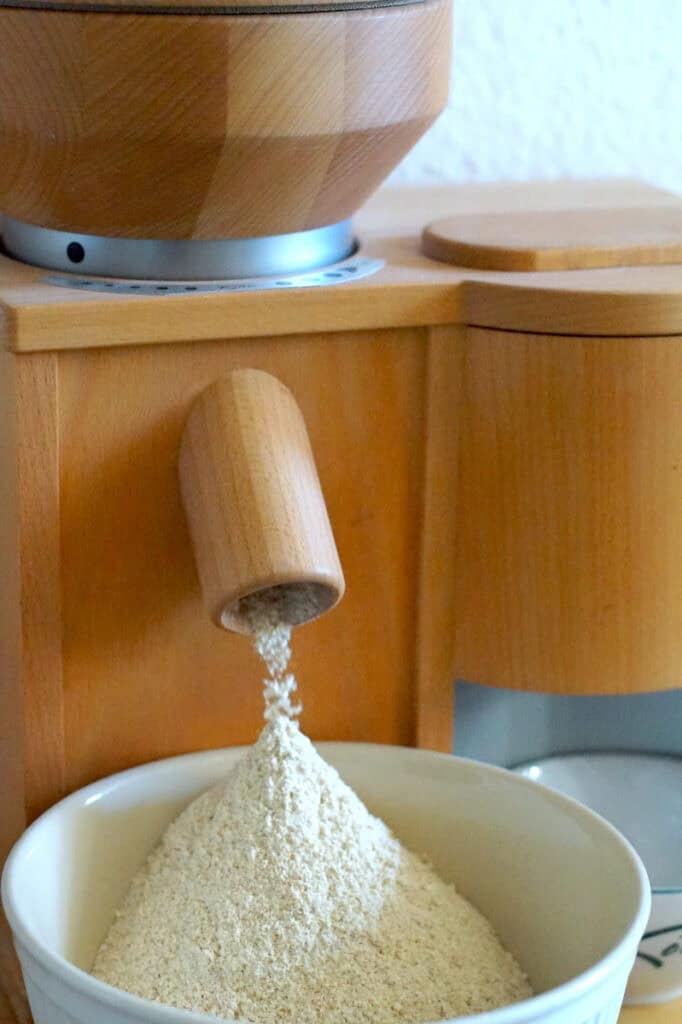
Step 01
Weigh the whole wheat berries and mill them on the finest setting of your grain mill.
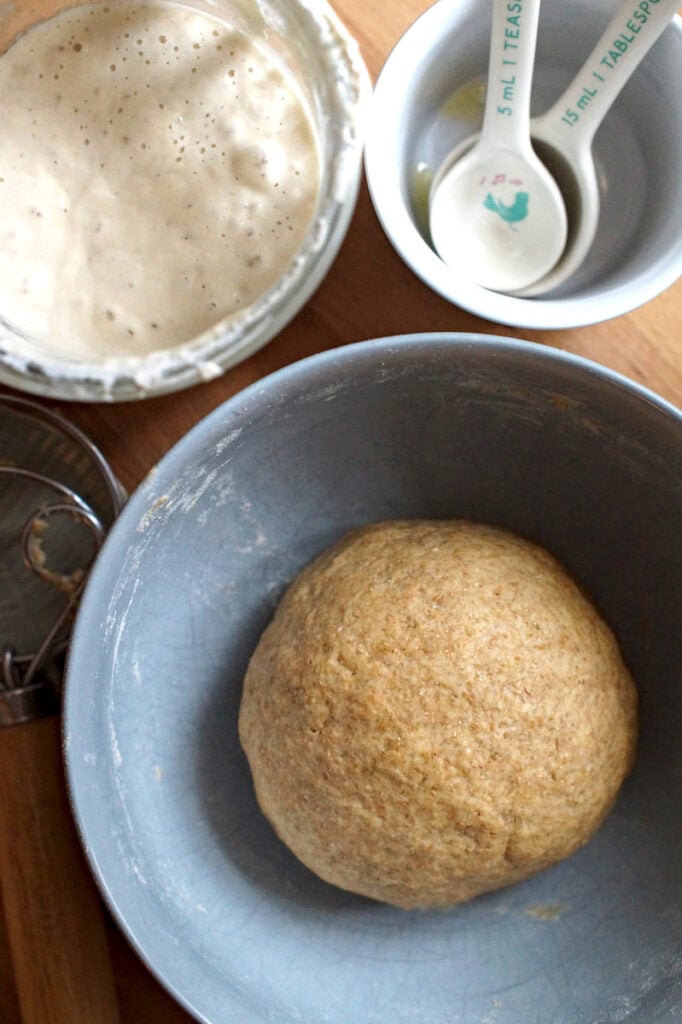
Step 02
In a medium bowl, combine fresh-milled flour and salt. Add the olive oil, sourdough starter, and water. Mix until the dough comes together, then knead briefly until there are no dry or floury bits left in the bowl. Cover the bowl and let the dough rest for 30 minutes.

Step 03
After the rest, check the texture and add a little more water if needed. The dough should be smooth and pliable, neither dry nor sticky.
Use the dough right away, or cover and ferment at room temperature for up to 18 hours.
prepare the flammkuchen

Step 01
When you’re ready to bake, preheat the oven to 250°C (485°F) and line a baking sheet with parchment paper. Turn the dough out onto a lightly floured surface and divide it into four roughly equal pieces. Roll out as thin as possible without tearing.
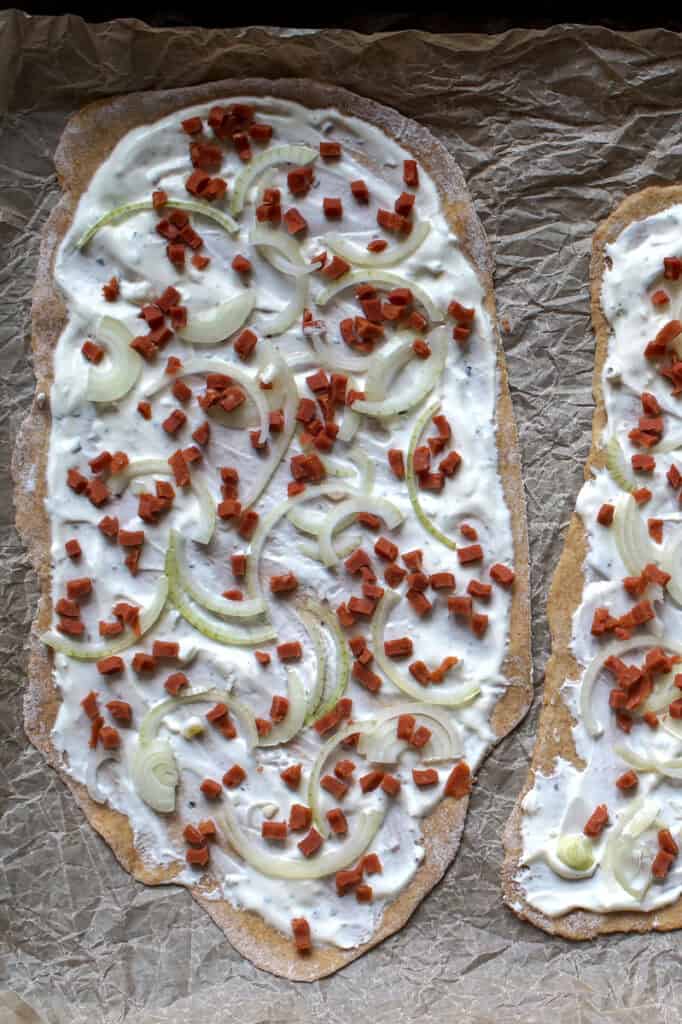
Step 02
Transfer the rolled dough to the prepared baking sheet. Season the sour cream with salt, pepper, and herbs (if using), then spread it in a thin, even layer. Top with sliced onions and finely diced (veggie) bacon.

Step 03
Bake for 10-18 minutes,until the edges are bronzed and crisp and toppings are cooked. Use the parchment paper to slide flammkuchen off the baking sheet and onto a wooden cutting board. Finish with freshly cracked black pepper, slice into wedges, and serve immediately.


Tips & Troubleshooting
Topping & Flavor Variations
Traditionally, flammkuchen is topped with crème fraîche or sour cream and sometimes a handful of chopped herbs. The classic version is topped with bacon and thinly sliced white onions, but feel free to make toppings your own:
If you’re looking for a version that uses up sourdough discard, head over to my sourdough discard flammkuchen recipe. I share a few more contemporary vegetarian toppings there as well.


How to Serve Flammkuchen
Flammkuchen is best served immediately, hot and crispy from the oven.
In Germany, it’s often enjoyed in a beer garden, bistro or pub setting, served as a quick and easy accompaniment to beer, wine, or cider.
Personally, I love serving it alongside a big, well-dressed green salad and a glass of something cold and bubbly.
How to Store & Freeze
To Store
After bulk fermentation, warp the dough tightly in plastic wrap and store in the fridge for up to 2–3 days. It may continue to ferment slowly in the fridge, so don’t be surprised if it puffs up a little.
Leftover baked flammkuchen can be enjoyed the next day. Eat it at room temperature, or reheat gently in a dry frying pan over medium-low heat to keep the bottom crisp. You can also warm it in a low oven, or reheat in short bursts in the microwave.
To Freeze
After bulk fermentation, the dough can be frozen for up to 1–2 months. Thaw overnight at room temperature, then transfer to the fridge until you’re ready to roll it out.
Fully baked and cooled flammkuchen can also be frozen for 1–2 months. For best results, double-wrap it in plastic wrap and foil. If you plan to freeze it, pull it from the oven a little early, before the edges have fully browned. That way it can be reheated without becoming too dark or dry.
Recipe FAQs
If you make this traditional flammkuchen recipe…
I’d love to hear how it turned out!

P.S. If you love the savory depth of sour cream, bacon and onions, but need a dish that serves a crowd, try my recipe for Zwiebelkuchen (German Onion Pie)!
Instead of a crispy base and thin topping, this pie has a super-soft, bready crust and a thick, silky-smooth filling.
happy baking!
Traditional Alsatian Flammkuchen (Tarte Flambée) with Sour Cream, Onions & Bacon

Equipment
- rolling pin
- baking paper
- baking sheet
Ingredients
Dough Ingredients
- 300 g freshly-milled flour - 1½ cups whole soft wheat berries or any other grain, or commercial whole grain flour (2½ cups)
- 175 g water - (¾ cup) more as needed
- 15 g olive oil - (1½ tbsp) or avocado/neutral oil
- 6 g table salt - (1 tsp)
- 5 g sourdough starter - (1 tsp) optional
Toppings
- 100 g sour cream - (6-7 tbsp) crème fraîche, or mix with Greek yogurt
- salt, pepper, nutmeg to taste - or a pinch of chopped herbs
- 3 small onions, finely sliced or chopped - pre-cooked for a jammier taste
- 140 g smoked bacon, diced or cut into lardons - (5 oz) lean cuts or vegan alternatives work
- chopped chives, herbs, or arugula - for topping after baking (optional)
Instructions
Mix the Dough
- Weigh the wheat berries and mill them on the finest setting of your grain mill.
- In a medium bowl, combine the fresh-milled flour and salt. Add the olive oil, sourdough starter, and water. Mix until a cohesive dough forms, then knead briefly until no dry flour remains.
- Cover the bowl and let the dough rest for 30 minutes. Check the texture and add a little more water if needed. The dough should be smooth and pliable, not dry or sticky.
Ferment (optional)
- Use the dough right away, or cover and ferment at room temperature for up to 18 hours.
Bake
- When ready to bake, preheat the oven to 250 °C / 485 °F. Line a baking sheet with parchment paper.
- Turn the dough out onto a lightly floured surface and divide it into four equal pieces. Roll each piece out as thin as possible without tearing.
- Transfer the rolled dough to the prepared baking sheet. Season the sour cream with salt, pepper, and herbs (if using), then spread it in a thin, even layer. Top with sliced onions and finely diced bacon or vegan alternative.
- Bake for 10–18 minutes, until the edges are deeply golden and crisp and the toppings are cooked.
Serve
- Slide the flammkuchen off the baking sheet using the parchment paper. Finish with freshly cracked black pepper, slice into wedges, and serve immediately.
Notes
-
Flour & hydration:
This dough is very forgiving, but different flours absorb water differently. Add just enough water to bring the dough together, then let it rest before adjusting. It should be smooth and pliable, not sticky. -
Fermentation is optional:
Flammkuchen dough doesn’t need to rise. You can bake it right away after a short rest, or ferment it at room temperature for up to 18 hours for more flavor and digestibility. -
Roll it very thin:
For classic flammkuchen, the dough should be rolled almost paper-thin. Thicker dough will bake up tough, not crisp. -
Go light on toppings:
Spread the sour cream in a thin, even layer and avoid overloading toppings. Too much moisture can prevent the base from crisping. -
Make-ahead option:
After bulk fermentation, the dough can be refrigerated for 2–3 days or frozen for up to 1–2 months. Thaw overnight before rolling.
More from the Grains & Greens Kitchen






%20with%20Sour%20Cream%2C%20Onions%20%26%20Bacon)
Works perfectly. It is very easy to roll out. I froze half of the dough the second time I made it. After a couple or three weeks in the freezer it was just as easy to roll out as fresh. I did a vegan topping and I really liked it.