
Toasted Oat & Honey Discard Sandwich Bread (Freshly Milled)
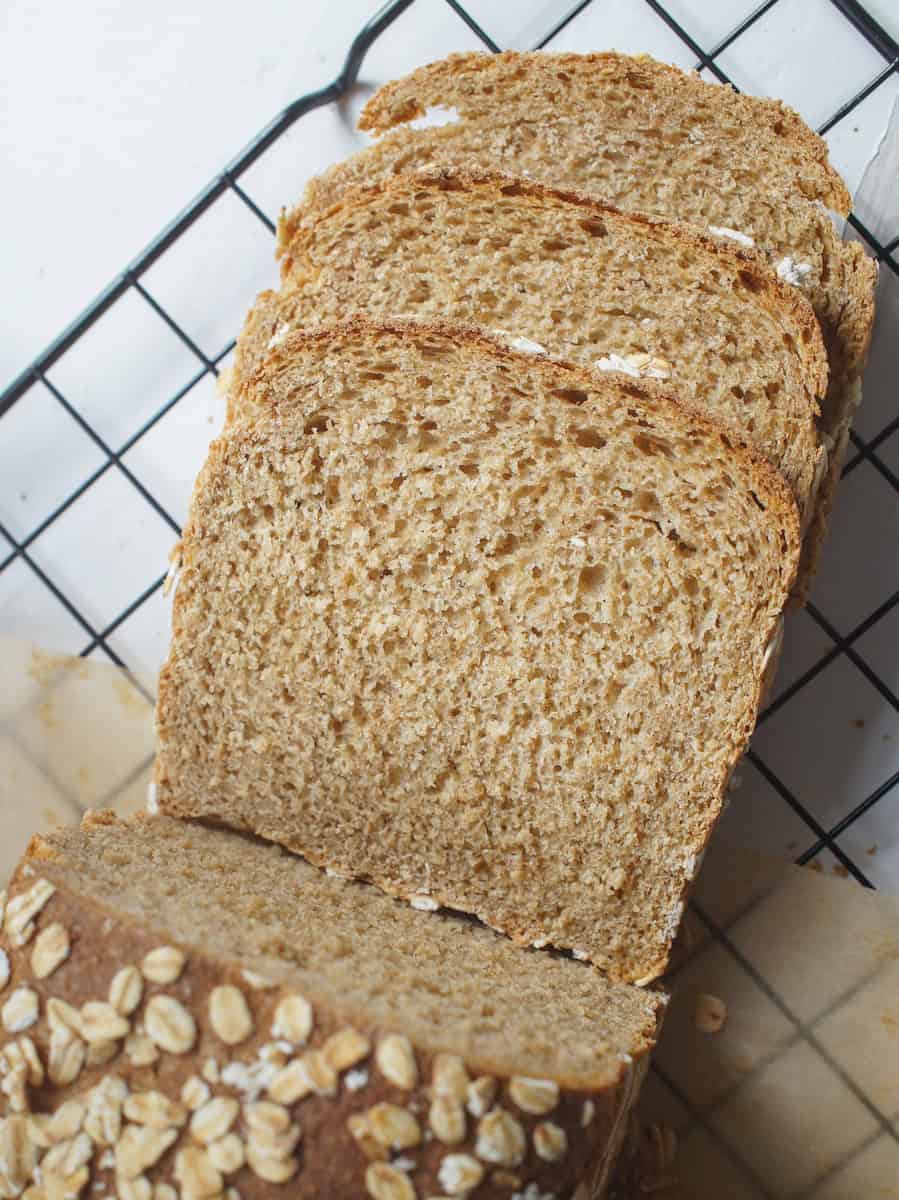
Toasty oats, a honey-sweet crumb, and great sourdough flavor make this quick whole wheat discard sandwich bread a favorite—freshly milled or not!
Update: Added a troubleshooting note in case of a crumbly center.


This is me coming clean: I used to think yeasted discard bread was not worth it. A shortcut. A shortcoming. A manifestation of my inability to bake “real bread” yet. When I started baking sourdough 10+ years ago, I wouldn’t even attempt it. I would just sneak my discard into my regular sourdough bread as an addition until it was all used up (I switched to a zero-waste upkeep for my starter almost right away).
But guess what? I was wrong. And I’m not ashamed to admit it! See, I grew a new starter this year, to document the process for the Simple Sourdough Starter Series. And even though my approach is as zero-waste as the process allows, I was left with unusual amounts of discard in my kitchen. Suddenly discard bread started to sound really good. And after a bit of fiddling and getting used to the sheer speed of commercial yeast fermentation (you want me to be back in 40 minutes?? What’s the rush?!) , I landed on a loaf that hit the spot.
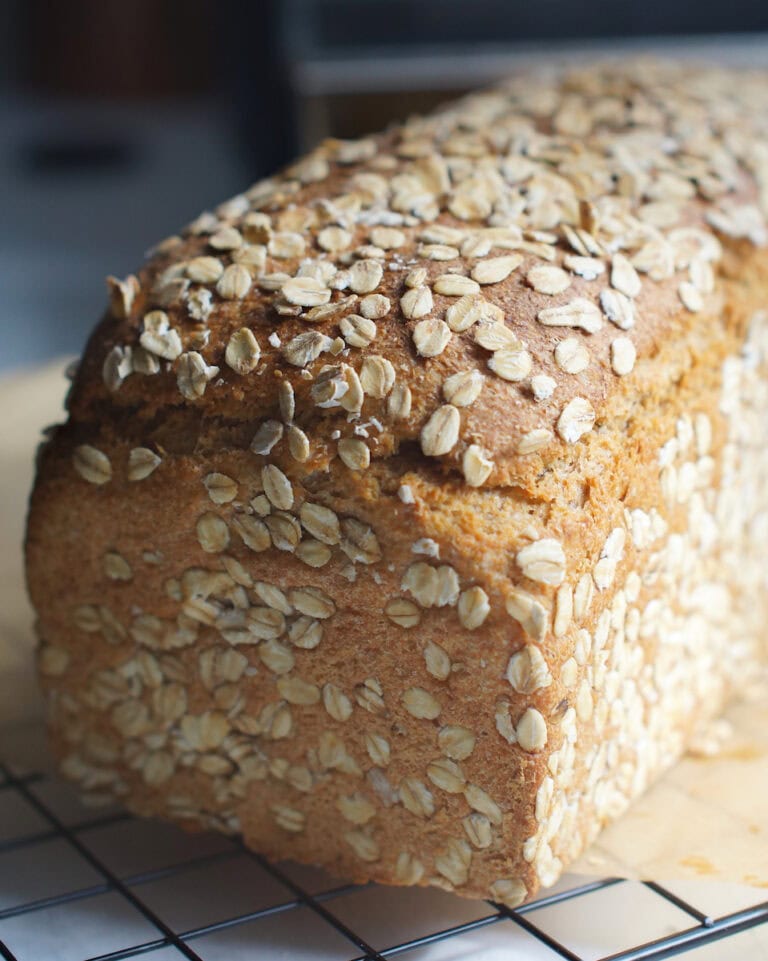
This honey oat sandwich bread is full of floral sweetness, a toasty oat crust, and a tender whole wheat crumb. It toasts like a champion. And you know what? I kept baking it after the recipe testing was finished. It’s a really good option to have up your sleeve when things don’t go according to plan and you need to bake some bread fast.
Why You’ll Love This Discard Sandwich Bread Recipe

Tools You May Need
Stand Mixer (optional) You can also make this loaf with some extra determination and a longer, intentional knead by hand.
Standard Bread Loaf Pan or
Pullman Bread Pan (a special kind of bread pan with taller sides and a lid)
Ingredients and Substitutions
Soft Wheat Flour I use freshly milled Gelbmehlweizen, a yellow German heritage soft wheat. Any regular European wheat berries should be fine, as wheat is soft in Europe per default. If you’re not sure if your wheat is soft or hard wheat, you can use spelt instead. It’s a delicious, seamless swap.
If you don’t mill at home, use store-bought European whole wheat flour, white whole wheat flour in the US, or whole grain spelt flour.
Honey It gives this sandwich bread a tender crumb and a lovely, floral sweetness. If you need your loaf to be vegan-friendly, try using raw cane sugar instead. It’ll lack the floral notes of honey, but it should bake up just as lovely. Liquid alternatives (like maple syrup) have different water contents, so you’ll have to reduce the water slightly.
Butter If you need a dairy free loaf, use a good vegan butter or margarine. Butter usually has a fat content of around 80%-82%, so look out for that when choosing a sub. Refined coconut oil is 100% fat and contains no water, so it may produce a slightly different crumb. It still works in a pinch, but you need to use slightly less.
Water Normally, you’d find milk in a sandwich bread to make crust and crumb extra soft. But when baking with whole grains, using just water results in a more open, less dense crumb.
How to Make Toasted Oat & Honey Discard Sandwich Bread (Step-by-Step)


01
Autolyse:
In the bowl of your stand mixer, combine fresh flour, water, starter and honey. Use the paddle attachment to combine the ingredients into a shaggy mass with no dry pockets of flour. Cover and rest for 30 minutes.
02
Knead the Dough:
Add the salt, butter and yeast and knead with the dough hook until the dough comes together and cleans the sides of the bowl. It doesn’t need to form a perfect window pane, but it should come together into a cohesive, non-sticky ball. (Knead no longer than 10 minutes, or you’ll start breaking down the more fragile gluten network of soft wheat and spelt.) Cover again and rest for 45 minutes.
03
Prepare Loaf Pan and Worktop:
Generously grease a bread loaf pan with butter and line with parchment paper if necessary. Gently dust your work surface and the top of the dough with a little flour. Keep oats ready.
04
Shape the Dough:
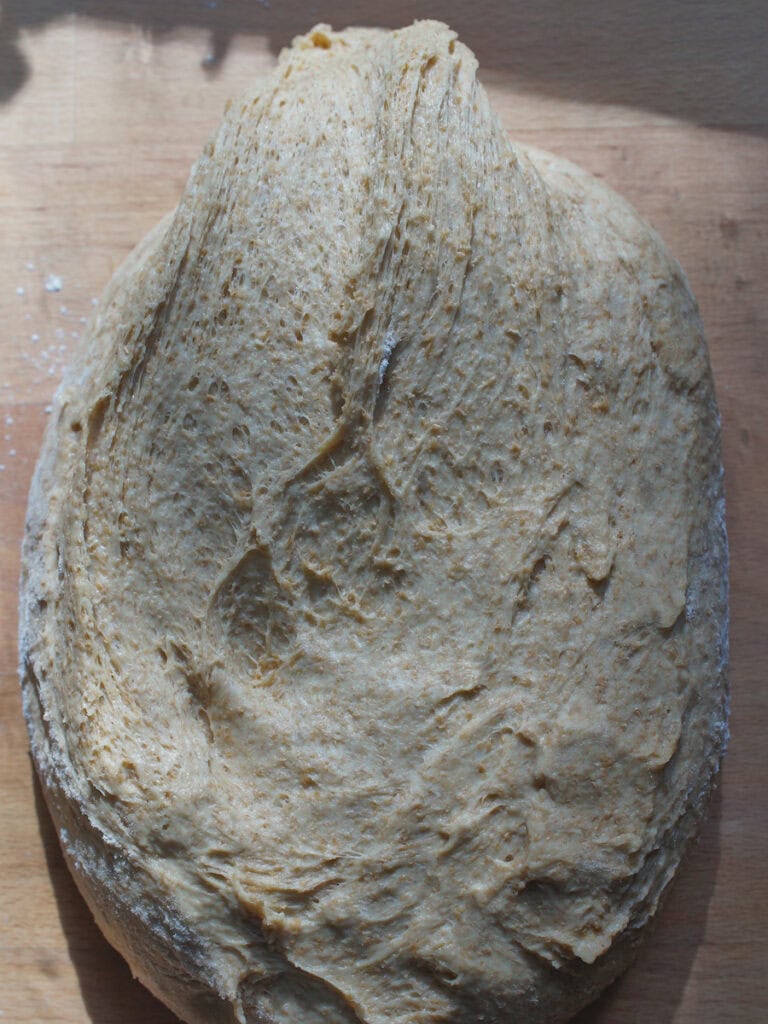
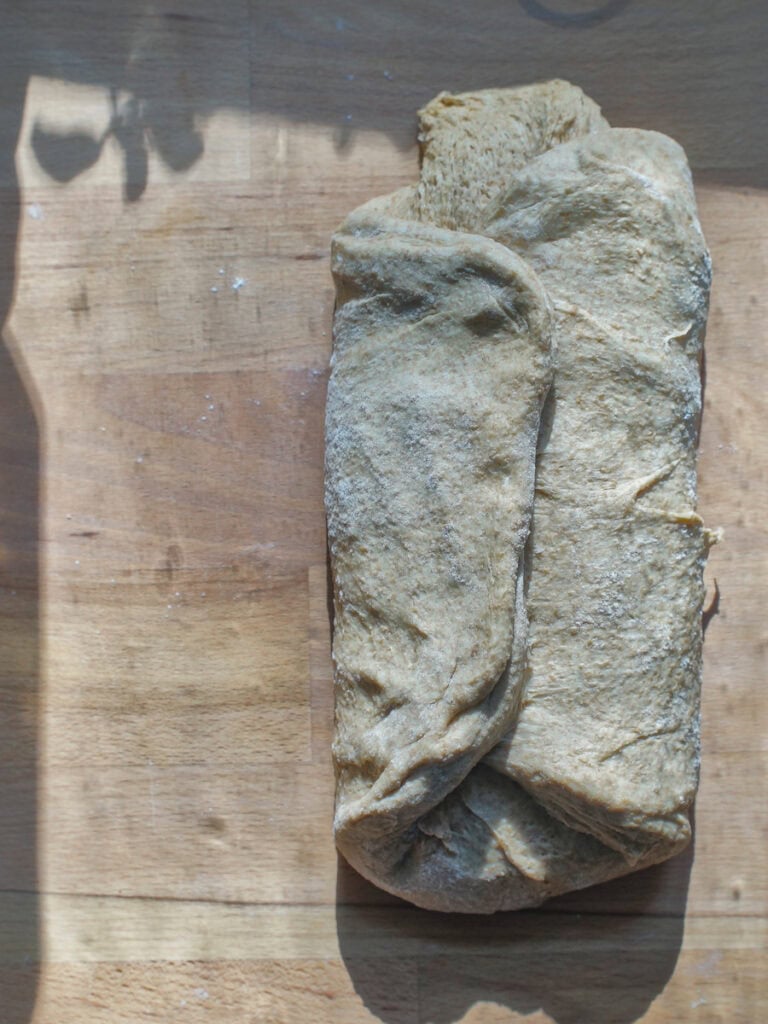
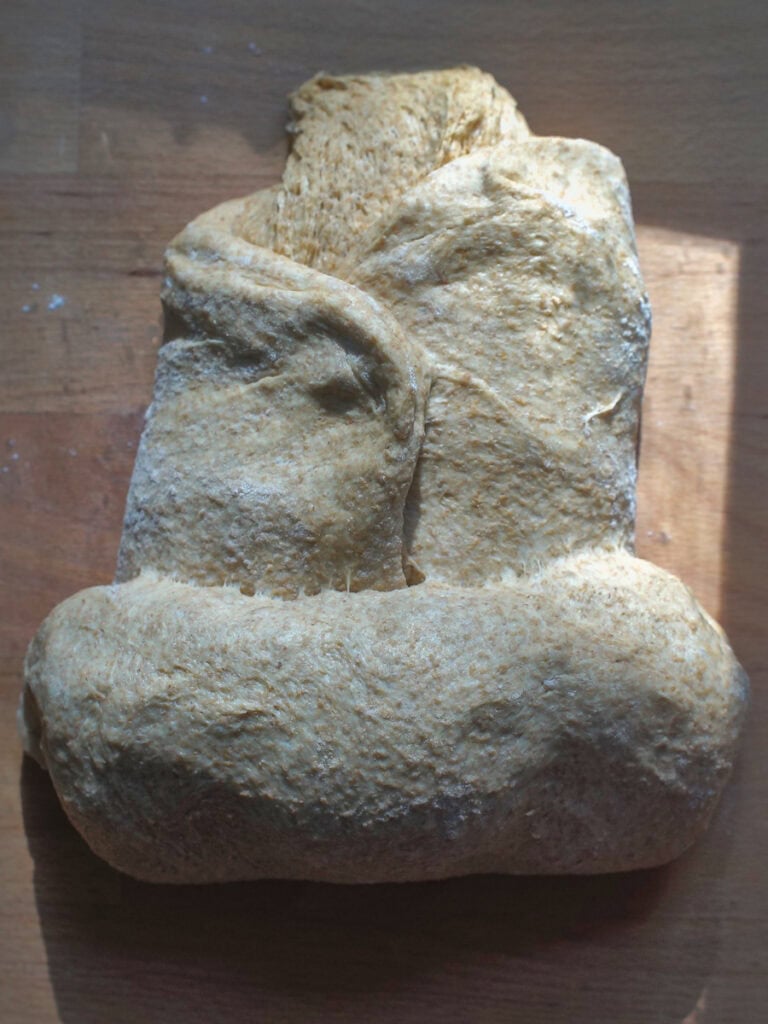
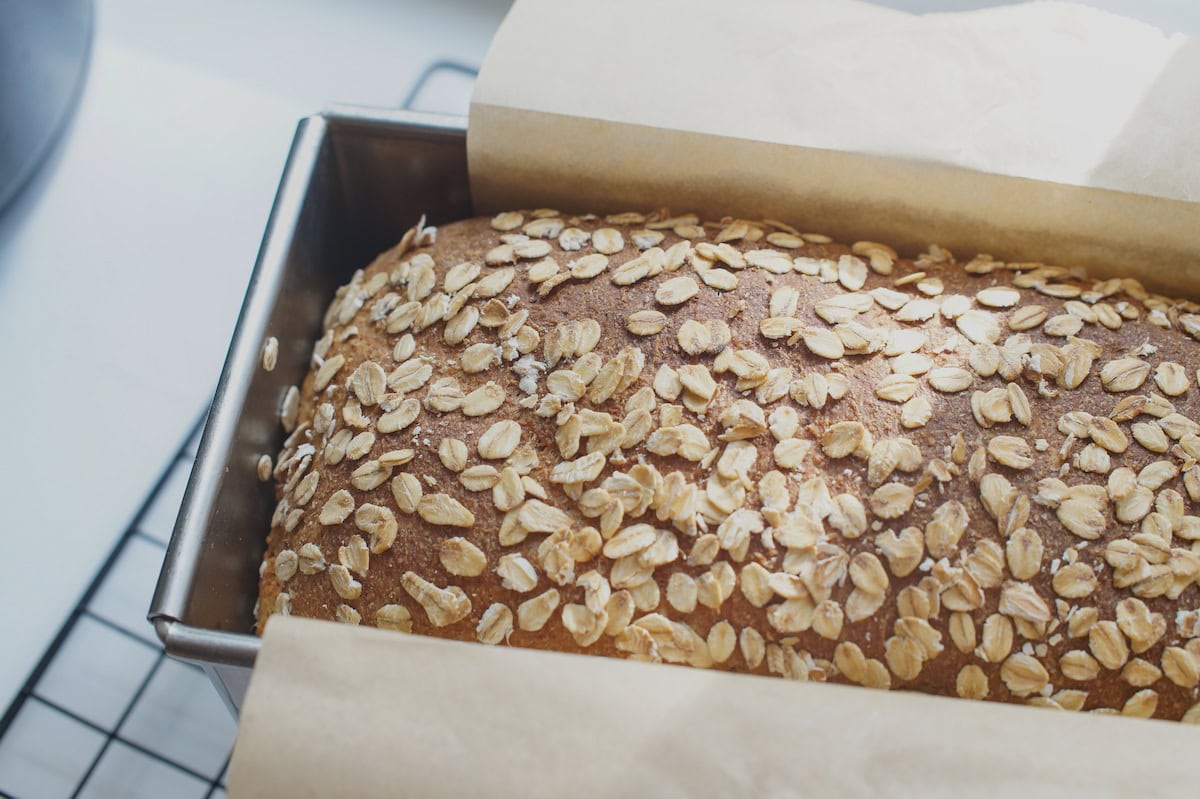
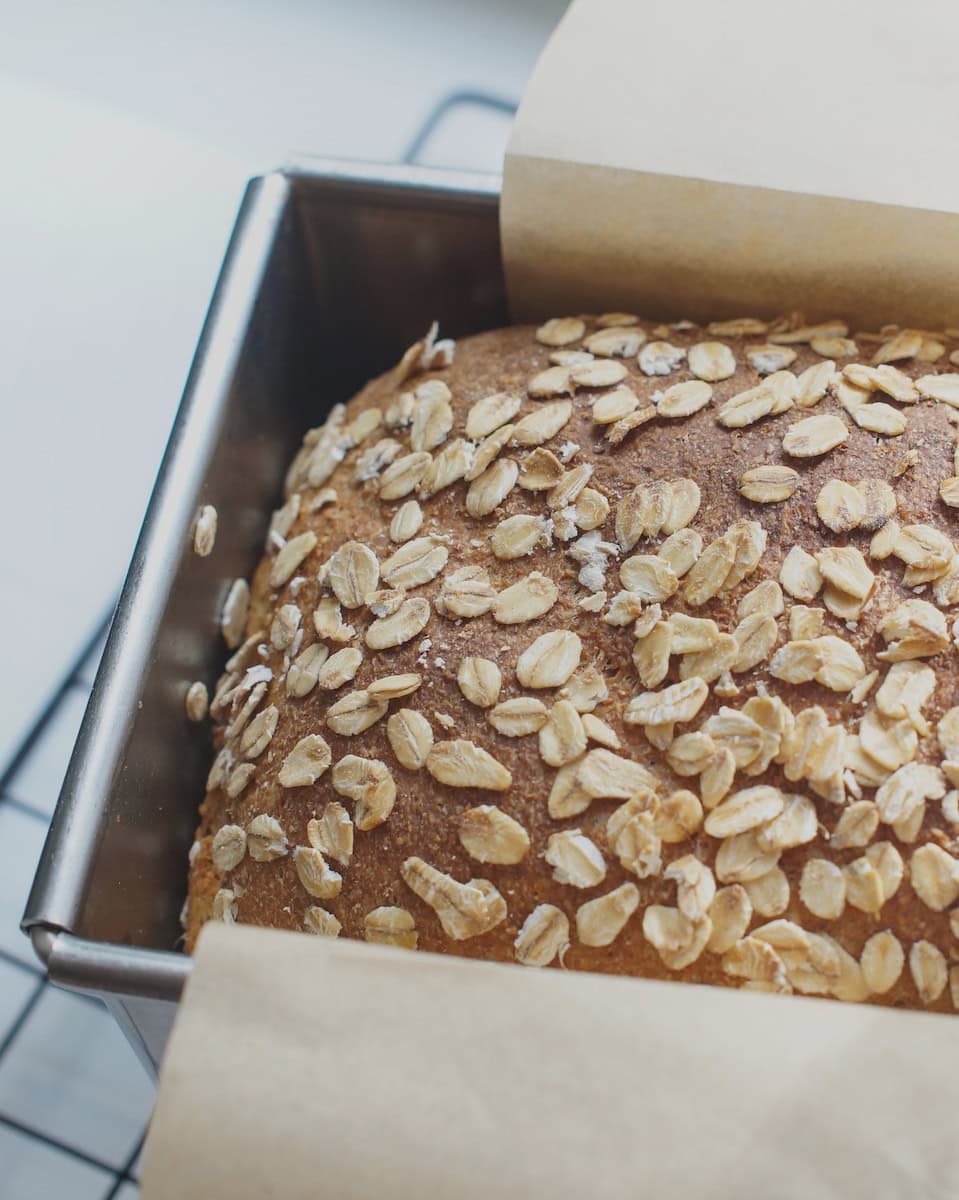
Carefully pull out the dough into a rough rectangle. Fold in both sides towards the middle, then roll up the dough from the smaller side. Rotate by a quarter turn and roll up from the shorter side again, to create tension on the dough’s surface. Use a spray bottle (or your hands) to wet the surface of the dough carefully. Sprinkle some oats on both sides of the dough and roll it back and forth, until all sides are encrusted with oats. Transfer to the loaf pan, cover and rest for 35 minutes. (The dough may feel very soft after rolling in the oats. That’s fine!)


05
Bake the Loaf:
Preheat the oven to 220°C (440°F). When the oven is hot and the dough fills most of the pan, spray the top of the dough with water, so the oats don’t burn in the oven. Reduce temperature to 200°C (400°F) and bake for 50-55 minutes, or until it reaches a core temperature of around 90°C (190°F).
Remove from the pan and let cool completely before slicing.
Tips & Troubleshooting
- If your bread crumbles towards the middle of the loaf: Freshly milled flour can behave differently from one batch of grain to another. If your loaf feels fragile or crumbly in the middle, try adding one egg to the dough. It improves structure and elasticity and has reliably solved this issue for me.
- Timing matters, so keep a close eye during the final proof. The heat of the milling process and the increased enzymatic activity of fresh flour result in extra fast fermentation times, and overproofing can lead to a crumbly center.
- Spray oats with water to keep them from turning too dark. If you don’t have a spray bottle at hand, you can either sprinkle some water with your hands, or pop some ice cubes on a preheated tray in the oven to create steam. Dry oats and no steam runs the risk of burnt oats. Any other combination came out fine.
- Don’t skip the autolyse part, even with store-bought flour. Since this dough is enriched slightly above average, it really benefits from a little rest to hydrate the bran well. It also means that the butter will be easier to knead in afterwards, as it keeps the gluten network more stable.
- Don’t worry if the dough feels rather soft after rolling in the oats. It doesn’t need to land in the loaf pan perfectly even. The tin will provide structure and take care of the rest.
- Check for doneness Lift the finished bread out of the pan and check for doneness. The loaf should sound hollow when tapped on the bottom. If it’s not quite there yet, you can lay it flat on its side and bake for an additional 5 minutes.


How to Serve Discard Sandwich Bread
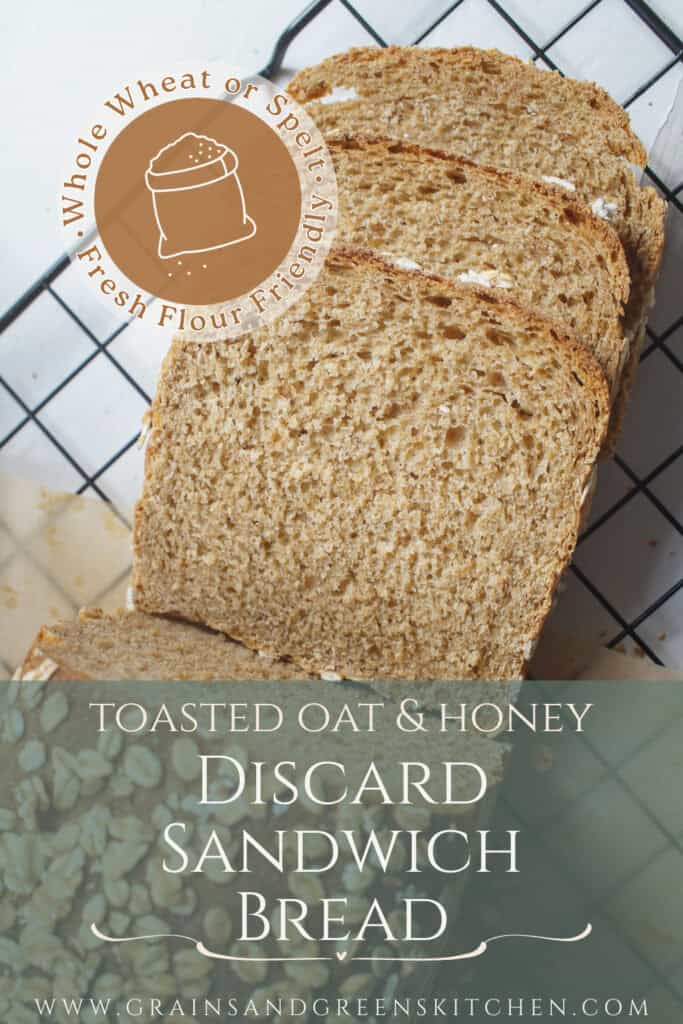
Slice bread thick for toast, a little thinner for sandwiches, or really thick for french toast.
As a true honey wheat sandwich, it’s a little sweeter by design, but still pairs beautiful with savory toppings. I especially love it with a little honey mustard and thick slices of sharp cheese.
Discard Sandwich bread is, of course, a perfect vessel for any sweet toppings, like my Easy Homemade Cherry Lime Jam, honey, chocolate spread, or a classic PB&J as well.
How to Store and Freeze
Once cooled completely, store the bread in an airtight container, like a plastic bag or your loaf pan if it comes with a lid to keep the crust and crumb soft.
Sandwich bread freezes well, either sliced or whole. If you can’t go through a whole loaf in time, freezing sliced bread makes it easier to toast without having to thaw anything. Separate slices with parchment paper, wrap tightly in a plastic freezer bag, and remove as much air as possible. Freeze for up to 2 months.
More from the Grains & Greens Kitchen
Need more ways to use up discard—or just looking for your next bake? These favorites have you covered:


If you make this Toasted Oat & Honey Discard Sandwich Bread…
I’d love to hear how it turned out!

P.S. If you’re into sandwich bread, you might love this recipes for Easy Whole Wheat and Einkorn Sourdough Sandwich Bread as well! Or try my Easy Homemade Cherry Lime Jam, it’s a dream on crispy toasted sandwich bread.
happy baking!
Toasted Oat & Honey Discard Sandwich Bread (Freshly Milled)
Equipment
- stand mixer - (optional) You can also make this loaf with some extra determination and a longer, intentional knead by hand.
- Standard Bread Loaf Pan
- or Pullman Bread Pan - (a special kind of bread pan with taller sides and a lid)
Ingredients
Autolyse Ingredients
- 280 g water - 1 cup + 3 tbsp
- 120 g sourdough discard (fridge cold is okay) - ½ cup
- 40 g honey - 2 tbsp
- 490 freshly milled soft wheat or spelt flour (see Notes for swaps) - 3¾ cups
Other Ingredients
- 10 g salt - 2 tsp
- 55 g butter (cold and cubed) - ¼ cup
- 7 g instant yeast - 2¼ tsp (or 1 sachet)
Instructions
Autolyse:
- In the bowl of your stand mixer, combine water, starter, honey and fresh flour. Use the paddle attachment to combine the ingredients into a shaggy mass with no dry pockets of flour. Cover and rest for 30 minutes.
Knead the Dough:
- Add the salt, butter and yeast and knead with the dough hook until the dough comes together and cleans the sides of the bowl. It doesn’t need to form a perfect window pane, but it should come together into a cohesive, non-sticky ball. (Knead no longer than 10 minutes, or you’ll start breaking down the more fragile gluten network of soft wheat and spelt.) Cover again and rest for 45 minutes.
Prepare Loaf Pan and Worktop:
- Generously grease a bread loaf pan with butter and line with parchment paper if necessary. Gently dust your work surface and the top of the dough with a little flour. Keep oats ready.
Shape the Dough:
- Carefully pull out the dough into a rough rectangle. Fold in both sides towards the middle, then roll up the dough from the smaller side. Rotate by a quarter turn and roll up from the shorter side again, to create tension on the dough’s surface. Use a spray bottle (or your hands) to wet the surface of the dough carefully. Sprinkle some oats on both sides of the dough and roll it back and forth, until all sides are encrusted with oats. Transfer to the loaf pan, cover and rest for 35 minutes. (The dough may feel very soft after rolling in the oats. That’s fine!)
Bake the Loaf:
- Preheat the oven to 220°C (440°F). When the oven is hot and the dough fills most of the pan, spray the top of the dough with water, so the oats don’t burn in the oven. Reduce temperature to 200°C (400°F) and bake for 50-55 minutes, or until it reaches a core temperature of around 90°C (190°F). Remove from the pan and let cool completely before slicing.
Notes
Flour Substitutions
This recipe is written for freshly milled soft wheat, but spelt works beautifully too. No home mill? Use store-bought whole grain spelt, whole wheat pastry flour (U.S.), or any European whole wheat flour.In Case of Crumbliness
Freshly milled flour can behave differently from one batch of grain to another. If your loaf feels fragile or crumbly towards the middle, try adding one egg to the dough. It improves structure and elasticity and has reliably solved this issue for me.Vegan / Dairy-Free Swaps
To make this loaf dairy-free, use a good vegan butter or margarine with a fat content around 80%. Refined coconut oil also works, but it’s 100% fat and water-free, so use slightly less. For a vegan loaf, swap honey with raw cane sugar. Same texture, slightly less floral flavor.Baking Tips
- Timing matters: Fresh flour ferments fast! Don’t let the dough overproof in the pan, so check your timer.
- Toasty oats, not burnt: Spray the oats with water before baking to keep them from turning too dark. No spray bottle? Wet hands or oven steam (ice cubes on a tray) work too.
- Check for doneness: The bottom should sound hollow when tapped. If not, flip on its side, and bake directly on the rack for another 5 minutes.
Recipe FAQs




)
Perfect for spontaneous baking as it does not take much prep time!
Nothing like a quality shortcut up your sleeve! 🙂