Swedish Pepparkakor (Fresh Milled Ginger Cookies)
Crisp, spicy Swedish pepparkakor: thin, classic ginger cookies made with fresh-milled soft wheat for deeper flavor and a festive Christmas treat.
This post may contain affiliate links. As an Amazon Associate, I may earn a small commission from qualifying purchases at no extra cost to you.

Thin, crisp, and beautifully spiced, pepparkakor are the deceptively simple cookies that make a Swedish Christmas feel complete. Their delicate snap and fragrant warmth set them apart from the softer, sweeter cookies we usually see around the holidays. Even if you’ve only encountered them at IKEA, making them fresh at home is a game-changer. They keep for weeks, look charming tied with a ribbon, and make perfect edible gifts (or an irresistible cookie stash for yourself).
Why You’ll Love This Pepparkakor Recipe


Tools You May Need
Grain Mill (Optional): Use freshly milled flour for the deepest flavor and highest nutritional benefit. It’s highly recommended but optional, of course. I prefer a stone mill over steel burrs (you can read more about choosing a grain mill in my home milling guide).
Rolling Pin: I prefer the even, handle-free ones. You’ll be rolling the dough as thin as possible, so use whatever feels most comfortable for you.
Cookie Cutter(s): Pepparkakor are perfect to use all the whimsical Christmas cookie cutters you’ve stashed away all year. I’d go for the less frilly shapes, so nothing gets stuck and torn. You’ll never go wrong with just simple hearts and stars.
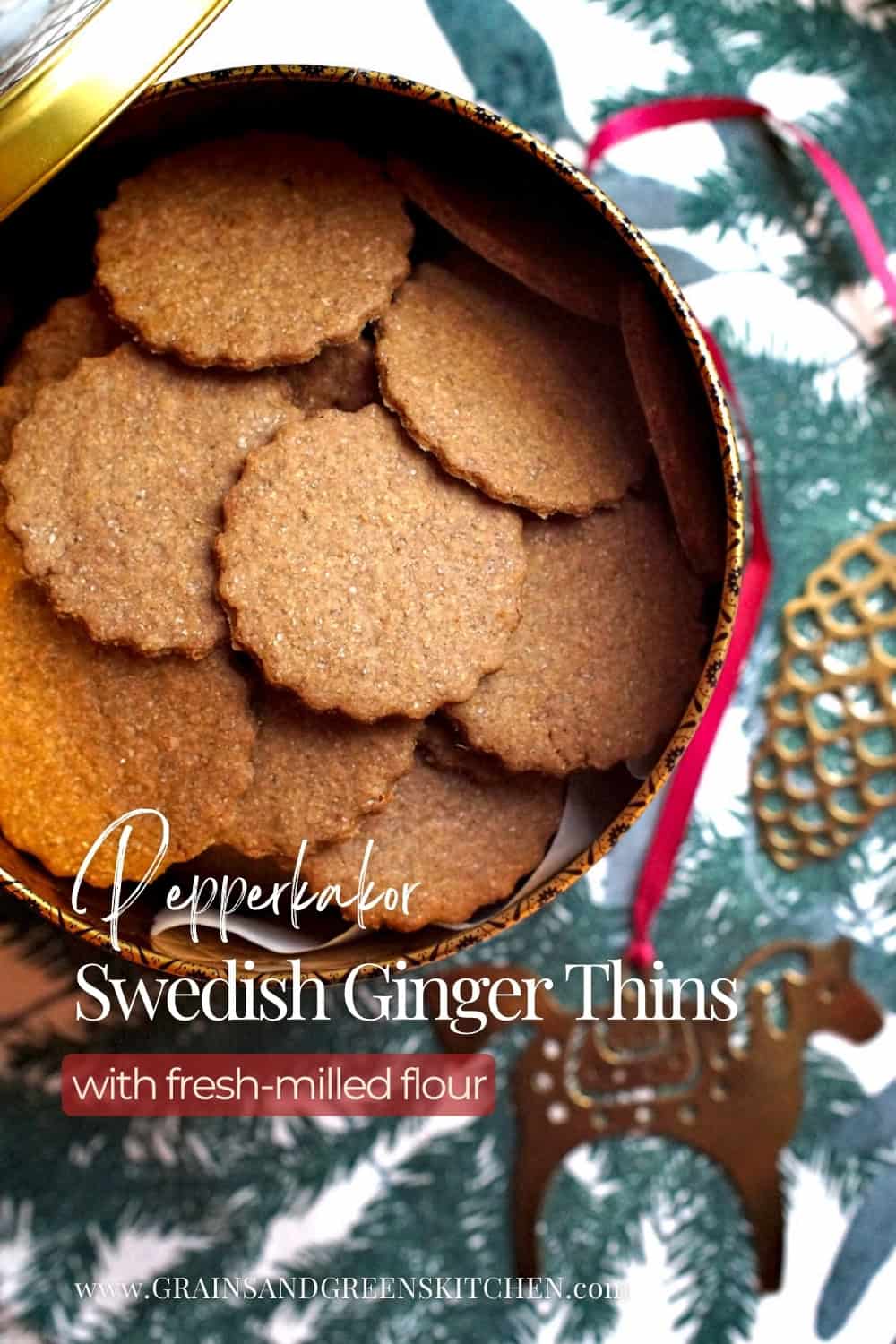
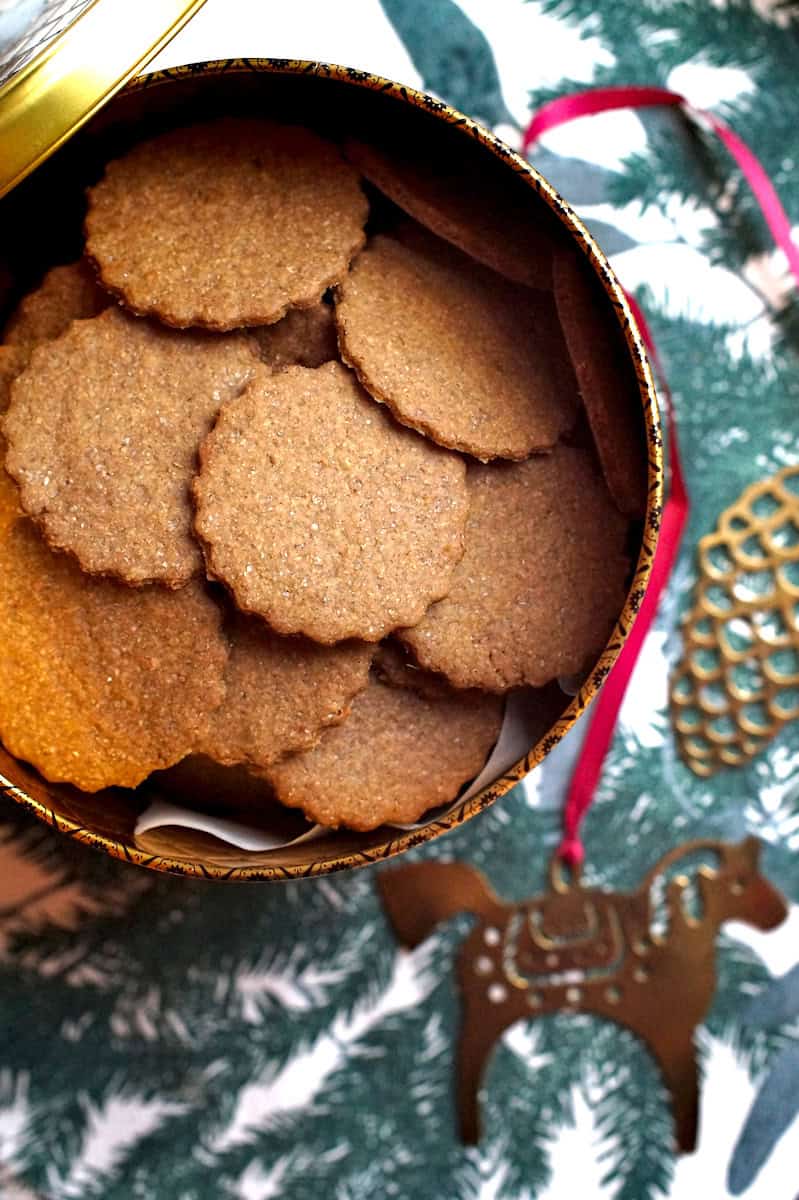
I also made an extra batch to give away as edible Christmas presents this year, and I just used a fluted circular cutter. If it’s good enough for Anna, it’s good enough for me.
Ingredients & Substitutions
Freshly Milled Flour: Soft wheat is the traditional choice for Swedish baking. Spelt can usually be used in the same way, though I haven’t personally tried it in this recipe. If you’re not milling at home yet, you can use store-bought whole wheat flour in Europe. In North America, a whole wheat pastry flour with a protein content of at least 10% is the closest match.
Butter: For dairy-free, vegan cookies, swap in a high-quality vegan block butter.
Syrup: Traditionally, Swedish pepparkakor are made with light sugar syrup (ljus sirap). For North America, golden syrup is the best substitute. I can’t easily get either, so I use sugar beet syrup instead for a richer, slightly malty flavor. They bake up darker but taste delicious.
Raw Cane Sugar: In my kitchen, raw cane sugar is the go-to. Regular granulated sugar works the same.
Spices: Pepparkakor literally means “pepper cakes,” though they don’t contain any actual pepper. The name dates back to a time when pepper was seen as exotic, and the word was used more generally to refer to spices. For this recipe, we’re using a blend of ginger, cinnamon, cloves, and cardamom, though you can substitute the combined amount with pumpkin spice in a pinch.
Orange Zest: A little freshly grated orange zest goes a long way! Please don’t swap in dried zest. Freshly grated zest will perfume the dough in the most lovely way. You’ll thank me when you open the oven door on the first finished tray.
How to Make Fresh-Milled Pepparkakor



01
Warm liquid ingredients
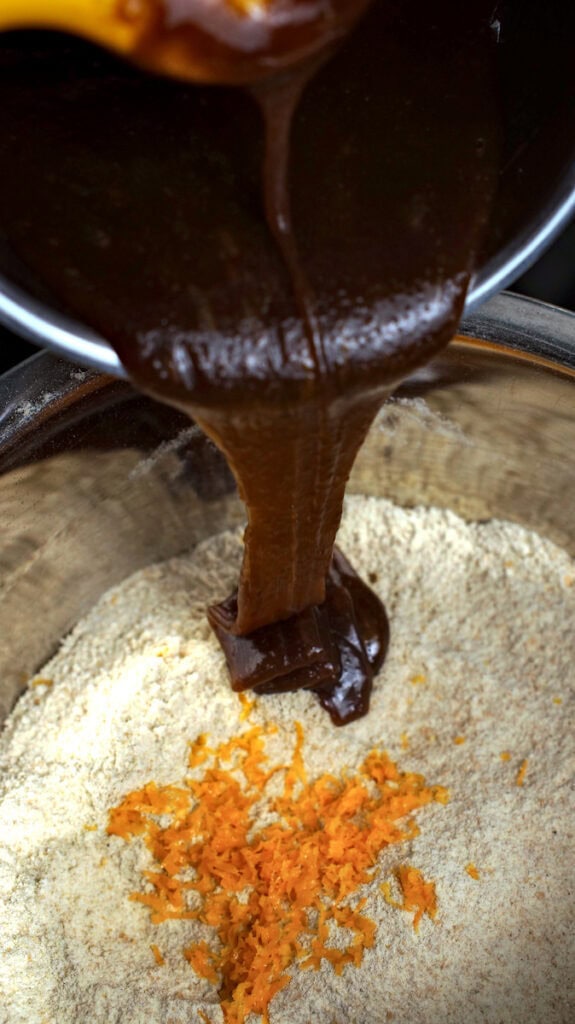
In a small pot or saucepan, combine the syrup, sugar and butter. Heat gently until the butter has melted and the sugar has dissolved. Cover and let cool for 30 minutes.
02
Combine dry ingredients
Measure out whole wheat berries and grind them on the finest setting of your grain mill.
In a mixing bowl (or the bowl of a stand mixer), combine the freshly milled flour, spices, baking powder, and grated orange zest. Stir to combine.
03
Knead together liquid and dry ingredients
Slowly pour the slightly cooled liquid ingredients into the dry ingredients, kneading as you go.
The mixture will be very crumbly at first. Add the water and continue kneading until the dough starts to come together.
04
Rest overnight
Use your hands to press the dough together into a tight ball. Some cracking is fine at this stage.
Cover and let rest overnight in a cool place (but not the refrigerator).
05
Roll out thin
Preheat the oven to 175°C (350°F) and line a baking sheet with parchment paper.
Lightly flour your work surface and rolling pin with a little flour. Divide the dough into 3-4 portions.
Working with one portion at a time, roll the dough as thinly as you possibly can. Cut into shapes using cookie cutters annd place on the prepared baking sheet.
Gather the scraps, knead them back together, and continue rolling and cutting until all the dough is used.
06
Bake
Bake for 10-12 minutes, until the cookies are set but not browned around the edges. They will crisp up fully as they cool.
07
cool and store
Let the cookies cool on the baking sheet for a few minutes, then slide the parchment paper onto a cooling rack and cool completely.
Store fully cooled pepparkakor in an airtight tin lined with parchment paper.


Tips & Troubleshooting
how to dial in the right dough consistency
Fresh milled flour gives deeper flavor, but it’s also an ingredient with a natural variance. Fresh grains will always act slightly different, depending on variety, growing season or storage conditions. Before rolling out the dough, check that it’s sufficiently hydrated.
After the dough has rested overnight, let it come to room temperature for 20-30 minutes. Take a small piece of the dough between two fingers and press it down: if you can press it out into a thin layer without breaking, you’re ready to bake. If the dough crumbles, add 1 to 2 teaspoons each of additional sugar beet syrup and softened butter to the dough and knead until incorporated. Rest the dough again for 4-6 hours, then repeat the test.
for extra crispy pepparkakor
To Decorate or Not?
Traditionally, pepparkakor are enjoyed plain (thin, crisp, and fragrant) without elaborate decoration. This keeps the focus on the snap, the spice, and the aroma. They’re often simply cut into shapes, sometimes pierced and tied with a ribbon to hang on the Christmas tree.
If you’d like a more “finished” look that still feels true to tradition, embossing the dough is a lovely option. It adds visual interest without adding another layer of sweetness or flavor. (I fully meant to emboss a batch for photos and then completely forgot. Baking with kids comes with a different set of priorities.)
That said, if you don’t feel bound by tradition, feel free to decorate them as you like. Intricate icing can be beautiful, and melted chocolate or a dusting of powdered sugar can add a festive touch.


How to Serve & Store Pepparkakor
Store fully cooled cookies in an airtight tin, ideally with a small piece of parchment paper.
Avoid plastic containers if your climate is humid. Tins keep them crispier for longer.
Pepparkakor are wonderful on their own, paired with a cup of tea, coffee, or glögg (mulled wine), or served alongside cheese or fruit for a festive, charcuterie-style platter.
They also make charming edible gifts! Simply wrap in parchment or cellophane bags and tie with a ribbon.
Recipe FAQs
If you make these fresh milled pepparkakor…

P.S. If you’re into Swedish Christmas baking, you might love these recipes too:
happy baking and god jul!
Swedish Pepparkakor (Fresh Milled Ginger Cookies)

Equipment
- grain mill
- stand mixer or hand mixer
- rolling pin
- cookie cutters
Ingredients
- 175 g butter - (¾ cup or 1½ sticks)
- 150 g sugar - (¾ cup)
- 90 g golden syrup or sugar beet syrup - (approx. ⅓ cup) See Ingredients for more information.
- ¾ tsp groud ginger
- ¾ tsp ground cinnamon
- ¾ tsp ground cardamom
- ½ tsp ground cloves
- grated zest of one small orange
- 400 g freshly milled soft wheat flour - (milled from approx. 2 cups whole soft wheat berries) See Ingredients to choose a store-bought alternative.
- 2 tsp baking powder
- 60 g water - (¼ cup)
Instructions
Warm liquid ingredients
- In a small saucepan, combine the syrup, sugar, and butter. Heat gently until the butter has melted and the sugar has dissolved. Remove from the heat, cover, and let cool for about 30 minutes, until just warm to the touch.
Combine dry ingredients
- Measure out the whole wheat berries and grind them on the finest setting of your grain mill. In a mixing bowl or the bowl of a stand mixer, combine the freshly milled flour, spices, and baking powder. Stir to combine.
Mix and knead
- Slowly pour the slightly cooled liquid ingredients into the dry ingredients, kneading as you go. The mixture will be very crumbly at first. Add the water and continue kneading until the dough begins to come together.
Rest overnight
- Press the dough into a tight ball; some cracking is fine. Cover and let rest overnight in a cool place, but not in the refrigerator.
Roll out
- Preheat the oven to 175°C (350°F) and line a baking sheet with parchment paper. Lightly flour your work surface and rolling pin. Divide the dough into 3–4 portions. Working with one portion at a time, roll the dough as thin as possible. Cut into shapes with cookie cutters and place on the prepared baking sheet. Gather and re-knead the scraps, then continue rolling and cutting until all the dough is used.
Bake
- Bake for 10–12 minutes, until the cookies are set but not browned around the edges. They will crisp fully as they cool.
Cool and store
- Let the cookies cool on the baking sheet for a few minutes, then transfer to a wire rack to cool completely. Store fully cooled pepparkakor in an airtight tin lined with parchment paper.
More from the Grains & Greens Kitchen