
Orange Sourdough Gingerbread Sheet Cake
A soft, fluffy sourdough gingerbread sheet cake with orange zest & warm spices, topped with vanilla cream cheese frosting and pomegranate seeds. It’s the perfect cake for Christmas, birthdays and other festive gatherings.
This post may contain affiliate links. As an Amazon Associate, I may earn a small commission from qualifying purchases at no extra cost to you.

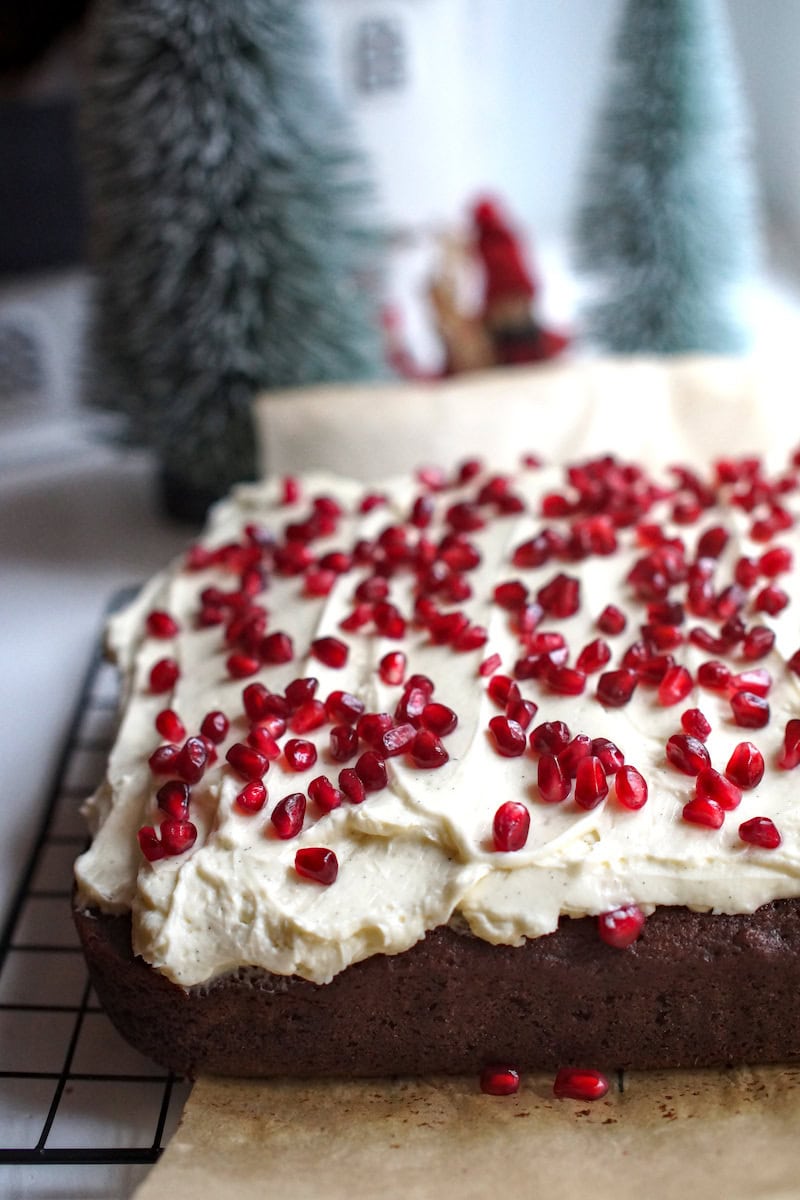
This year, I wanted to carry the joy of my pepparkakor obsession into a cake, so I baked an orange sourdough gingerbread sheet cake for my birthday, and topped it with a luscious vanilla cream cheese frosting and bright, fruity pomegranate seeds. The flavor is bold, filled with that absolutely addictive aroma of orange, ginger and warm spices, all wrapped up in a soft, cloud-like cake.
Hosting right after the holidays means the festive marathon continues, and with a birthday right between Christmas and New Years, I love a cake that feels high-impact but is still easy enough to pull off.
If you’re looking for a festive cake that delivers big flavor without a lot of fuss, this one checks a lot of boxes.
Why You’ll Love This Sourdough Gingerbread Sheet Cake Recipe


Tools You May Need
Stand Mixer or Electric Hand Mixer (Optional): The cake itself can be stirred together by hand, but you’ll need a mixer to whip the thick cream cheese frosting together.
9 x 13-inch Cake Pan (23×33 cm): My pan is extra deep, but it should be just fine in a regular 9×13-inch cake pan.
Small Offset Spatula (Optional): More comfortable for spreading frosting by hand, but a regular silicone spatula or butter knife will do the job in a pinch.
Ingredients & Substitutions
Gingerbread means a lot of things around the world. These notes and substitutions will help it work in any kitchen.
All-purpose Flour: Depending on where you are in the world, your all-purpose or plain flour might be more or less absorbent. Not to worry, there’s a flexible amount of hot water at the end of the recipe. Add just as much as you need until the batter can be poured into the cake pan: not liquid like water, but loose enough to spread and fill the pan on its own.
Molasses or Sugar Beet Syrup: Molasses is a North American staple, while sugar beet syrup (and sometimes treacle) is more commonly found in European kitchens. Use whichever is easily available to you. They all work in this recipe and will lend a familiar gingerbread flavor, so you really can’t go wrong here.
Warm Spices: I’ve been obsessed with Swedish pepparkakor this holiday season. Ginger is the star of the spice mix, with added notes of cinnamon, cloves and cardamom. If cardamom is not part of your usual spice rotation (or you’re not a fan), replace it with more ginger or cinnamon, or skip it entirely.
Sourdough Discard: Sourdough discard adds a subtle depth of flavor, though in this generously spiced cake it matters more for texture than taste. In reaction with the baking soda, it helps create an extra soft, fluffy crumb. Use fresh discard that’s less than 24 hours old for the mildest flavor (or active, bubbly starter, stirred down or weighed out).
Orange: To make the orange aroma stand up to the warm spices in the batter, use the zest of one large or two small unwaxed oranges. Don’t be shy here. This is one of those cases where more really is more.
Vanilla: I prefer vanilla bean paste in the frosting for both its aroma and the visible flecks of vanilla. If the flecks matter to you but you’d rather use vanilla extract, add the scraped seeds from half a vanilla bean instead. I wouldn’t recommend vanilla sugar here, as the granules won’t dissolve smoothly into the frosting.
How to Make Orange Sourdough Gingerbread with Vanilla Cream Cheese Frosting (Step-by-Step)
Bake The Cake
01

Heat the oven to 175°C (350°F). Butter or line a 9×13-inch metal baking pan with parchment, leaving a little overhang for easy removal. Bring the water to a boil and set aside.
In a medium bowl, whisk together the flour, baking soda, ginger, cinnamon, cloves, cardamom (if using), and salt. Set aside.
02

Melt the butter gently in a saucepan or microwave-safe bowl. While still warm, whisk in the light brown sugar until smooth and mostly dissolved.
03

Whisk in the syrup or molasses, and orange zest.
04

Add the eggs and whisk until fully combined. Whisk in sourdough discard, until the mixture is completely smooth and cohesive.
05

Add the dry ingredients to the wet mixture and fold gently until no dry pockets remain. The batter will start to puff up at this stage, so stir carefully.
06

Carefully stir the hot water into the batter, starting with a little less than a cup. Add more gradually, until the mixture becomes smooth, glossy, and loose enough to flow easily into the pan.
07

Pour the batter into the prepared pan. It should spread out on its own. Bake on the center rack for 40 minutes, or until a toothpick inserted in the center comes out clean or with a few moist crumbs.
08

Let the cake cool in the pan for about 20 minutes, then lift it out (if using parchment) and transfer to a wire rack. Cool completely before frosting.
Frost, decorate and serve
01

In a mixing bowl or stand mixer, beat the cream cheese until smooth. Add the softened butter and continue beating until fully incorporated, followed by the vanilla and salt. Mix in 2 cups of powdered sugar on medium speed until the frosting is silky and smooth. Taste and adjust sweetness if desired.
02

Once the gingerbread has cooled completely, spread the cream cheese frosting evenly over the top. Finish with a scattering of pomegranate seeds for a festive touch.
That’s it! Your holiday gingerbread is ready to slice and serve!
Tip: In Europe, cream cheese is much higher in moisture, so start by beating the butter until pale and fluffy. Add the powdered sugar and vanilla next and beat until light and airy, then stir in the cream cheese on low speed to prevent splitting.
Tips & Troubleshooting
Variations
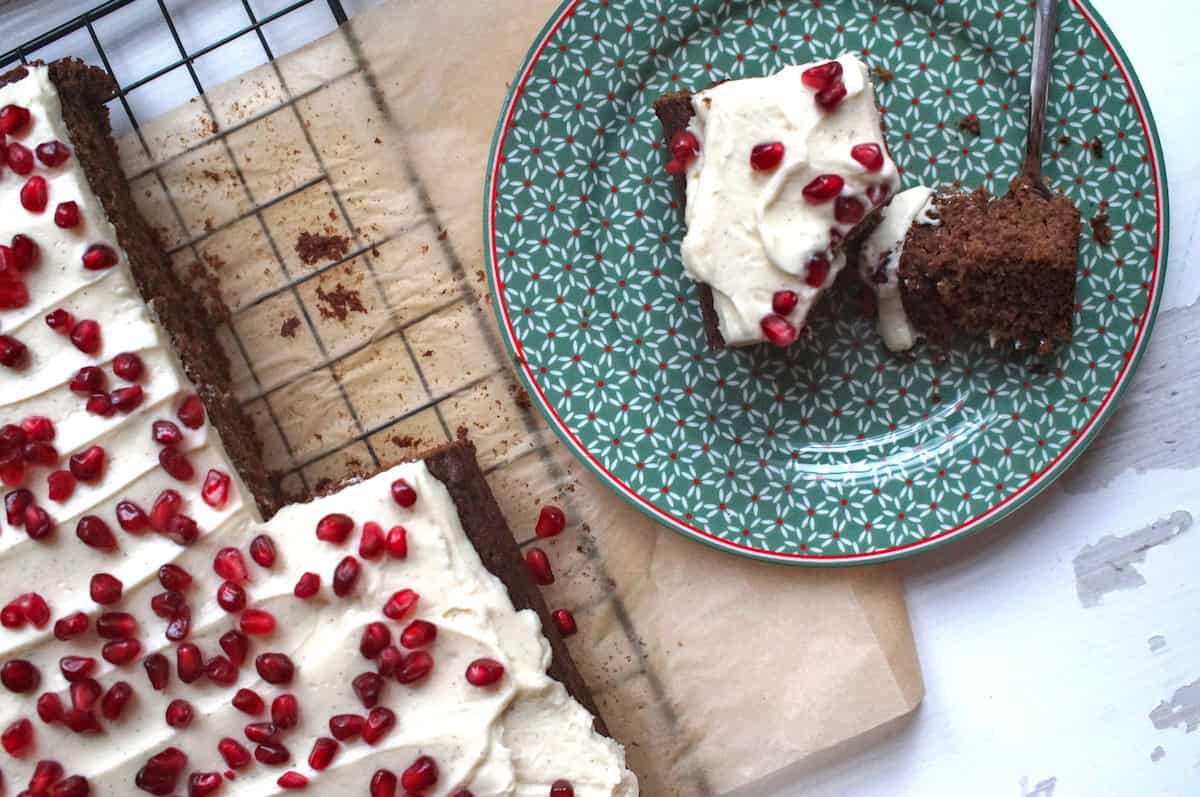

How to Store & Freeze Sourdough Gingerbread
At room temperature
For short-term storage, keep unfrosted gingerbread well covered at room temperature for up to 2–3 days. Wrap it tightly or store it in an airtight container to prevent drying out.
In the refrigerator
To store the cake longer, refrigerate the cake in an airtight container. Plain gingerbread will keep well for up to 1 week; frosted cake should be refrigerated and enjoyed within 4–5 days. Bring slices to room temperature before serving for the best texture, or warm plain gingerbread briefly if desired.
Freezing
For freezing plain gingerbread, slice the cake first, then wrap individual pieces tightly in plastic wrap and place them in a freezer-safe container or bag. Freeze for up to 2 months. Thaw at room temperature or warm gently before serving. For best results, always freeze the cake unfrosted and add frosting after thawing.
Recipe FAQs
If you make this Orange Sourdough Gingerbread…
I’d love to hear how it turned out!

P.S. If you enjoyed this recipe, you might love these too:
happy baking!
Adapted from Little Spoon Farm, inspired by Joy the Baker.
Orange Sourdough Gingerbread Sheet Cake (with Vanilla Cream Cheese Frosting)

Equipment
- 9×13-inch baking pan (23×33 cm) - metal, not glass
- stand mixer or hand mixer - optional
Ingredients
For the Gingerbread
- 360 g all purpose flour - (3 cups)
- 2¼ tsp baking soda
- 2 tsp ground ginger
- 2 tsp ground cinnamon
- 1 ½ tsp ground cardamom
- ½ tsp ground cloves
- ½ tsp salt
- 170 g butter, melted and cooled - (¾ cup or 1½ sticks)
- 100 g light brown sugar - (½ cup)
- 320 g molasses or sugar beet syrup - (1 cup)
- 2 large eggs
- zest of 1 large organic orange - or two small
- 180 g sourdough discard - (¾ cup)
- 240 ml water, more as needed - (1 cup)
For the Cream Cheese Frosting
- 285 g cream cheese - (10 oz)
- 140 g butter, at room temperature - (½ cup + 2 tbsp)
- 195 – 240 g powdered sugar - (2 – 2½ cups)
- 2 tsp vanilla extract - or vanilla bean paste
- pinch of salt
Other Ingredients
- pomegranate seeds - for garnish
Instructions
Make the Gingerbread Cake
- Preheat the oven to 175 °C (350 °F). Butter or line a 9×13-inch metal baking pan with parchment, leaving a slight overhang for easy removal. Heat the water until hot and set aside.
- In a medium bowl, whisk together the flour, baking soda, ginger, cinnamon, cloves, cardamom (if using), and salt. Set aside.
- Melt the butter gently in a saucepan or microwave-safe bowl. While still warm, whisk in the light brown sugar until mostly dissolved.
- Whisk in the molasses or syrup, followed by the eggs and orange zest, until smooth. Stir in the sourdough discard until fully combined.
- Add the dry ingredients to the wet mixture and fold gently until no dry pockets remain. The batter will start to foam up, to stir carefully.
- Carefully stir the hot water into the batter. Add more gradually, until the mixture becomes loose enough to flow easily into the pan and level out by itself.
- Pour the batter into the pan. Bake on the lower middle rack for 40 minutes, or until a toothpick inserted in the center comes out clean or with a few moist crumbs.
- Let the cake cool in the pan for about 20 minutes, then lift it out (if using parchment) and transfer to a wire rack. Cool completely before frosting or serving.
Make the Cream Cheese Frosting
- In a mixing bowl or the bowl of a stand mixer, beat the cream cheese until smooth.
- Add the softened butter, vanilla and salt, and beat until fully combined and creamy.
- Add 195 g (2 cups) of powdered sugar and beat on medium speed until the frosting is smooth and silky. Taste and adjust sweetness if needed.
Assemble and Serve
- Make sure the gingerbread is completely cooled before frosting. Spread the cream cheese frosting evenly over the top with an offset spatula or butter knife. Sprinkle with pomegranate seeds for decoration.
- Slice with a sharp knife, wiping between cuts for clean slices. Serve immediately or refrigerate until ready to serve.
Notes
- Storage: Store plain gingerbread at room temperature up to 2–3 days, in the fridge up to 1 week, or freeze unfrosted for 2–3 months. Frosted cake should be refrigerated and eaten within 4–5 days.
- Serving plain: If you skip frosting, consider adding 1/4 cup light brown sugar to the batter or serving with lightly sweetened whipped cream to maintain balanced sweetness.
- Hot water: The hot water at the end loosens the batter and helps the cake rise evenly. It does not need to be boiling, just hot enough to create a loose, pourable batter.
- Prep first: Make sure the cake pan is prepped and the oven fully preheated before mixing the wet and dry ingredients and adding the hot water, so the batter can go straight into the oven before it looses its punch.
- Molasses or syrup: Use the molasses, sugar beet syrup, or treacle that’s most familiar to you; it will change the flavor slightly, but the cake will bake beautifully regardless.
- Pan choice: A metal pan gives the best texture. Glass pans heat more slowly and can cause uneven baking.
More from the Grains & Greens Kitchen








Ooooh i bet that orange zest makes this soooo yummy! Thanks for sharing!
Addictive even 😋