
Fresh Milled Sourdough Lussekatter (Swedish Saffron Buns)
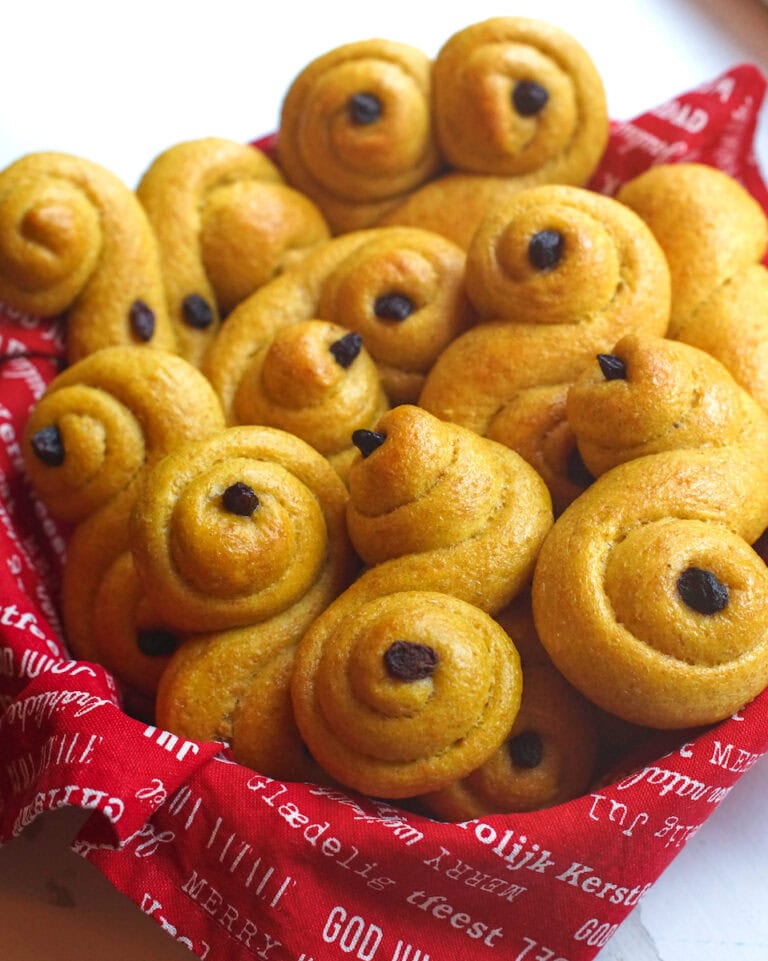
Fresh milled sourdough lussekatter with saffron, made extra soft using tangzhong. A fluffy fresh-flour take on classic Swedish Saffron Buns for St. Lucia day.
This post may contain affiliate links. As an Amazon Associate, I may earn a small commission from qualifying purchases at no extra cost to you.


Lussekatter are kind of a big deal in my kitchen. They’re familiar, reliable and a wonderful change of your year-round sourdough routine—and also one of the few bakes I’d usually bust out the white flour bin for. I made several attempts at fresh flour lussekatter over the years. And even though non of them turned out “bad”, they also never turned out as soft as I had hoped for—until now!
I already knew tangzhong (a.k.a. good old German Mehlkochstück) to be the key to soft and tender whole grain bakes. Along with a couple of other small tweaks, these fresh flour sourdough lussekatter came out so incredibly soft and bouncy they more than rival the white flour buns now!
Why You’ll Love This Recipe
Ingredients & Substitutions
Freshly Milled Flour: Whole soft wheat berries, ground on the finest setting of your grain mill are the perfect base for sourdough saffron buns. If you’re not milling at home (yet), choose any whole wheat flour from a European supermarket. In North America, a whole wheat pastry flour with a protein content of at least 10% is the closest match.
Saffron: I prefer ground saffron for ease of use. If using whole threads, do your best to dissolve them while heating the milk. They won’t dissolve any further once kneaded into the dough.
Traditional Swedish recipes call for 1 g of saffron, but the buns still taste beautifully of saffron and still turn a deep golden orange if you use as little as 0,2 g. Depending on where you live, saffron can be crazy expensive, so feel free to use as little or as much as makes sense for you.
Whole Milk: Always use whole milk, so the crumb stays tender and moist. For dairy-free buns, soy milk is the most reliable replacement, but any plant milk with a similar fat content works.
Unsalted Butter: For dairy-free buns, choose a high quality vegan block butter with a fat content of around 80%.
Sourdough Starter: Feed your starter 4-6 hours in advance, so it’s active and bubbly. If you’d rather use up some sourdough discard, follow these directions.
Eggs: They add bounce and softness and prevent an overly “whole wheat-y” crumb. In my experience, it also helps the tangzhong do its job better in fresh milled baking.
And of course, mixing a whole egg with a tablespoon of milk makes the best, naturally sweet tasting egg wash.
Raisins: You’ll only need a handful of raisins to put the “eyes” on the buns. Make sure to soak them before baking, so they don’t burn in the oven.
If raisins aren’t your thing, use dried cherries or cranberries, or just sprinkle your buns with a little pearl sugar instead.
How to Make Freshly Milled Sourdough Saffron Buns (Step-by-Step)


01
Mill Grains
Weigh out whole soft wheat berries and grind them on the finest setting of your grain mill. Separate 50g of freshly milled flour and set aside.
02
Cook the Roux (Tangzhong)
In a small pot over medium low heat, warm the milk, butter and saffron, just until the butter has melted. Whisk in the 50g of freshly milled flour and heat until thickened but not boiling.
Let the mix cool down to under 42°C (107°F). If you dip your finger in, it should feel neither warm nor cold.
03
Autolyse
In a medium large bowl (or the bowl of a stand mixer) combine freshly milled flour, sugar, salt, egg and sourdough starter. Add the saffron infused tangzhong and combine the ingredients into a shaggy dough. Cover and rest for 30 minutes.
04
Knead and Ferment Dough
Knead the dough for 7-10 minutes with the dough hook of your stand mixer, hand mixer or your hands, until it becomes smooth and elastic. Gather into a smooth, tacky ball, cover and ferment at room temperature overnight (around 8 hours).
05
Shape Buns
When the dough is puffy and doubled in size, turn it out onto a clean kitchen counter (skip dusting with flour). Divide the dough into 20 small pieces. Roll each piece of dough out into a long, thin rope beneath the palms of your hands. Roll the rope up from both ends at the same time, to create small S-shaped buns (or hop over to my original Sourdough Lussekatter Recipe for more traditional shapes to try).
06
Proof Buns
Place the shaped buns onto a baking sheet lined with baking paper, cover with plastic wrap, and let rise for 1-2 hours at room temperature.
In the meantime, cover the raisins with hot water in a small bowl, to soak and soften.
07
Egg Wash
When the buns have risen and puffed, preheat the oven to 220°C (425°F). Beat the egg with 1 tablespoon of milk and egg wash the buns. Stick a raisin into the swirls on both ends of the bun.
08
Bake Buns
Bake for 08-15 minutes, or until the buns are just turning golden. Keep an eye on them—over baking them by just a little can make them dry!
09
Cool Buns
Rest the baking sheet on a wire rack and let the buns cool off. Serve straight away or loosely cover with plastic wrap if you plan to serve them later.


Tips & Troubleshooting
Variations


How to Serve, Store & Freeze
Saint Lucia buns are traditionally served on December 13th (Saint Lucia day), where they’re enjoyed plain, with a cup of coffee or tea, for breakfast or fika.
Personally, I love them best dunked into hot chocolate, or split, buttered and spread with jam, honey or chocolate spread (or a sharp cheese, though that’s a little controversial).
Fresh milled lussekatter can be stored at room temperature for several days, up to a week. Keep them well wrapped, so they don’t dry out.
Lussekatter are also perfect for freezing! Fill a freezer bag with completely cooled buns, remove as much air from the bag as possible and freeze for up to 1-2 months. Set the bag out to thaw overnight and warm the saffron buns up briefly before serving.
Recipe FAQs
If you make these freshly milled sourdough lussekatter…
I’d love to hear how they turned out!

P.S. Check out my other Swedish inspired recipes to cozy up the dark season:
happy baking!
Fresh-Milled Sourdough Lussekatter (Swedish Saffron Buns)
Equipment
- stand mixer or hand mixer - (optional, you can knead by hand as well)
Ingredients
Tangzhong Ingredients
- 255 ml milk - (1 cup + 1 tbsp)
- 100 g butter - (½ cup)
- 0.2-1 g saffron, ground or in threads
- 50 g freshly milled soft wheat flour - See Ingredients for store-bought flour alternatives.
Dough Ingredients
- 400 g freshly milled soft wheat flour - See Ingredients for store-bought flour alternatives.
- 85 g sugar - (¼ cup + 3 tbsp)
- 1 large egg
- 120 g sourdough starter, active and bubbly - (generous ½ cup)
- 3 g salt - (½ tsp)
Egg Wash
- 1 egg
- 1 tbsp milk
- raisins
Instructions
Mill Grains
- Weigh out whole wheat berries and grind them on the finest setting of your grain mill. Separate 50g of freshly milled flour and set aside.
Cook the Roux (Tangzhong)
- In a small pot over medium low heat, warm the milk, butter and saffron, just until the butter has melted. Whisk in the 50g of flour and heat until thickened but not boiling.
- Let the mix cool down to under 42°C (107°F). If you dip your finger in, it should feel neither warm nor cold.
Make the Dough
- In a medium large bowl (or the bowl of a stand mixer) combine the rest of the freshly milled flour, sugar, salt, egg and sourdough starter. Add the saffron infused tangzhong and combine the ingredients into a shaggy dough. Cover and rest for 30 minutes.
- Knead the dough for 7-10 minutes with the dough hook of your stand mixer, hand mixer or your hands, until it becomes smooth and elastic. Gather into a smooth, tacky ball, cover and ferment at room temperature overnight (around 8 hours).
Shape Buns
- When the dough is puffy and doubled in size, turn it out onto a clean kitchen counter (avoid dusting with flour). Divide the dough into 20 small pieces. Roll each piece of dough out into a long, thin rope beneath the palms of your hands. Roll the rope up from both ends at the same time, to create small S-shaped buns.
- Place the shaped buns onto a baking sheet lined with baking paper, cover with plastic wrap, and let rise for 1-2 hours at room temperature.
- In the meantime, cover the raisins with hot water in a small bowl, to soak and soften.
Bake Buns
- When the buns have risen and puffed, preheat the oven to 220°C (425°F). Beat together egg and milk and egg wash the buns. Stick a raisin into the swirls on both ends of the bun.
- Bake for 8-15 minutes, or until the buns are just turning golden. Keep an eye on them—over baking them by just a little can make them dry!
- Rest the baking sheet on a wire rack and let the buns cool off. Serve straight away or loosely cover with plastic wrap if you plan to serve them later.
Notes
- If you’re not milling at home, choose any whole wheat flour from a European supermarket. In North America, a whole wheat pastry flour with a protein content of at least 10% is the closest match. Y
- Hop over to my original Sourdough Lussekatter Recipe for more traditional shapes to try.
- For ancient grain, bread flour, or sourdough discard lussekatter, check out the Variations above.
- Store any leftover buns in an airtight container at room temperature for up to 2–3 days. They also freeze beautifully. Just thaw and warm gently to enjoy their soft texture again!





)