
Soft & Squishy Sourdough Hamburger Buns
Made with freshly milled soft wheat and tangzhong, these sourdough hamburger buns are fluffy, flavorful, and beautifully tender. (Bonus: they’re springy enough to pass the squish test!)
This post may contain affiliate links. As an Amazon Associate, I may earn a small commission from qualifying purchases at no extra cost to you.


Dreaming of fresh-milled sourdough hamburger buns that don’t scream “healthy alternative”?
So was I.
I wanted a bun that was unapologetically a burger bun: soft, squishy, springy, and sturdy enough to hold everything inside without falling apart. And you know what?
Freshly-milled flour isn’t something we need to work around. It’s the ingredient we choose on purpose.
Because a burger bun shouldn’t just carry the filling. It should bring something delicious to the table, too.
Yes, you can make bread with soft wheat!
Fresh-milled soft wheat makes incredible sourdough bread. Once you know how it likes to be handled, it produces beautiful, flavourful loaves.
Explore more fresh-milled soft wheat sourdough recipes:
Why You’ll Love This Recipe
What to Expect From This Dough
This dough will behave differently from what you’re used to.
It will feel surprisingly dry at the beginning. Almost like it’s not going to come together. That’s expected.
After a short rest to fully hydrate the flour, you’ll knead in fridge-cold butter. That’s when the dough transforms: it becomes soft, pliable, and cohesive. It will still feel firm and a little tacky. That’s exactly where we want it.
This dough rises slowly, so don’t keep checking on it. It may seem like nothing is happening after a couple of hours, but patience pays off.
Once bulk fermentation is complete, you’ll see the shift: the dough will be tall and puffy, forming a well-rounded dome. It may double in size or even more. That slow, steady rise while maintaining structure is its quiet superpower.


Why Soft Wheat?
or: why I don’t just swap in fresh-milled hard wheat.
Classic American hamburger buns are usually made with refined white hard wheat flours (or a mix) such as all-purpose or bread flour. Their higher gluten strength allows them to trap gas efficiently and create a light, airy structure. They also bind and retain water easily, which keeps the crumb soft after baking.
So why do I choose to use fresh-milled soft wheat instead?
Most importantly, it’s the only wheat I have access to in my part of the world. But that’s not a problem at all.
Fresh-milled hard wheat behaves differently from refined bread flour. Its sharper, tougher bran can interfere with gluten development, and its ability to bind a lot of water can sometimes contribute to a heavier crumb.
Soft wheat, as the name suggests, has a softer, finer bran with slightly smoother edges. It naturally produces a more tender crumb. However, it also has less gluten strength and binds less water, so it benefits from a different approach:
Instead of relying on high hydration in the dough itself, overall hydration is kept lower. All of the milk and water is cooked with part of the flour into a thick, pudding-like tangzhong. This gelatinised starch mixture holds moisture without overloading soft wheat’s more fragile gluten structure.
The result is a soft, springy bun with excellent structure: light, resilient, and still soft for days after baking.
And honestly: I don’t feel like I’m missing out. Soft wheat has its own strengths, and both wheats can make amazing buns when you play by their rules.
Tools You May Need
Grain Mill (optional): Mill your own flour for best flavor and nutrition (or choose a store bought alternative).
Digital Kitchen Scale: Weighing ingredients is the most reliable way to make bread.
Small Pot & Whisk: To cook the tangzhong roux.
Stand Mixer (optional): You can also knead the dough by hand, but it’s not my favorite here.
Bench Scraper (optional): To divide the dough into roughly equal buns.
Rolling Pin: To flatten and spread the buns before proofing.
Ingredients & Substitutions
Fresh-Milled Soft Wheat Flour
I prefer soft wheat for tender buns like these, milled on the finest setting of your grain mill.
If you don’t mill your own flour at home, any high-quality whole wheat flour in Europe will work.
In the U.S., a whole wheat pastry flour with at least 10% protein is the closest match.
Butter
I prefer enriching with butter for best flavor. For dairy-free buns, you can swap a high-quality vegan block butter without compromising the texture.
Milk
Use whole milk, or a whole milk-style plant milk for dairy-free buns. Soy milk performs most similarly in baking.
Eggs
One egg, split between dough and egg wash, is all we need.
I’ve had some luck replacing eggs with extra soy milk for vegan doughs, though I haven’t tested it in this recipe yet.
Sugar
The sugar serves as food for the sourdough starter and helps prevent sourness during a long bulk. The buns won’t be sweet once baked. You can reduce it if you mind your sugar intake, but the buns will taste more sour if you skip it entirely.
Sourdough Starter
Use active, bubbly starter that’s been fed within the last 4–8 hours. If you keep your starter in the fridge, cold starter that’s been fed within the last 7 days works fine.
Sesame Seeds
Use hulled or unhulled sesame seeds, to lightly sprinkle on top of the buns after egg washing.
I also love adding a few nigella seeds as well (they pack a punch, so add sparingly).
Baking Schedule
One of my favorite things about this dough is the leisurely pace of fermentation. If you don’t live by the clock (like me) and miss shaping by just a little, you’ll still be rewarded with beautifully soft, golden buns.
Here’s what a typical timeline looks like:
There are a couple of easy ways to fit these into your schedule:
How to Make Fresh-Milled Sourdough Hamburger Buns (Step-by-Step)
Step 01
Mill Grains
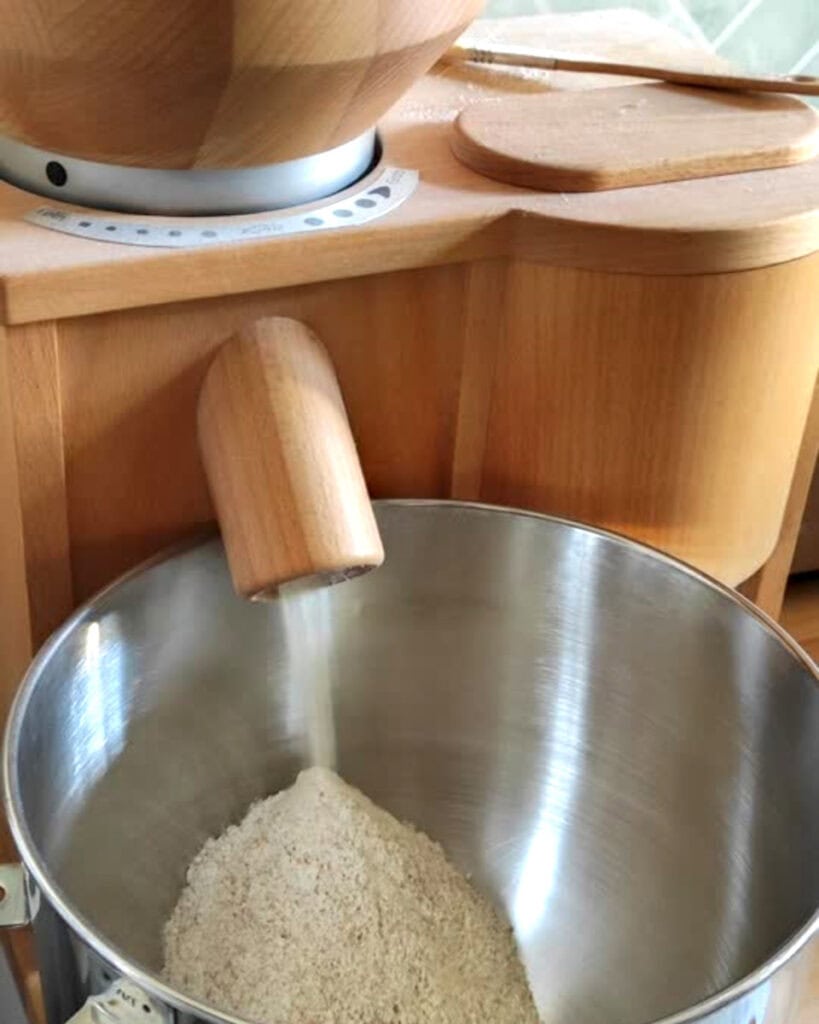
Weigh out 450g of whole soft wheat berries and grind them on the finest setting of your grain mill. Separate 50g of freshly milled flour and set aside.
Step 02
Cook the Roux (Tangzhong)

In a small pot, combine milk, water, salt, and 50g of freshly milled flour, and whisk to combine. Cook over medium low heat, stirring often, until thickened to a pudding-like consistency.
Let the mixture cool down to below 42°C (107°F). It should feel neutral to the touch.
Step 03
Mix & Rest (Fermentolyse)

In a large bowl (or the bowl of a stand mixer), combine the remaining freshly milled flour, sugar, egg and sourdough starter. Add the cooled tangzhong and mix into a dry, shaggy dough.
Cover and let rest for 30 minutes.
Step 04
Knead & Bulk Ferment

Knead the dough for 2–3 minutes using a stand mixer (or by hand).
Add the cold butter cubes, one by one, and keep kneading for another 7–8 minutes, until the dough becomes smooth and pliable.
Shape into a soft, slightly tacky ball, cover, and let ferment at room temperature for 8–10 hours or overnight, until puffy and well risen.
Step 05
Divide & Shape

When the dough is domed and airy, sprinkle it with a bit of flour, and turn it out onto a clean work surface. Divide into 8 equal portions.
Gently roll up each piece just enough to smooth it out, then shape into tight balls. Use a rolling pin to gently flatten the buns.
Step 06
Proof Buns

Place shaped buns on a parchment-lined baking sheet and cover with plastic wrap. Let rise at room temperature for 1–2 hours, until noticeably puffy and soft to the touch.
Step 07
Egg Wash

Once the buns are fully risen, preheat the oven to 220°C (430°F). Beat the egg white with 1 tablespoon of milk and brush the buns evenly. Sprinkle with sesame and nigella seeds (if using).
Step 08
Bake & Cool

Bake for 15–18 minutes, until turning golden.
Let the buns cool on the baking sheet set over a wire rack. Serve slightly warm or cool to room temperature.


How to Serve Fresh-Milled Sourdough Hamburger Buns
These are as delicious served plain, soft and squishy as they are toasted. They’re sturdy enough for generously filled burgers, yet soft enough to enjoy with nothing more than a little butter.
They’re perfect for:
How to Store & Freeze
Recipe FAQs
If you make these fresh-milled sourdough hamburger buns…
I’d love to hear how they turned out! Did you enjoy the squish?

P.S. If you enjoy super soft buns, you might love these recipes too:
happy baking!
Soft & Squishy Sourdough Burger Buns with Fresh-Milled Flour

Equipment
- grain mill - (optional, you can also pick a store-bought whole wheat alternatve)
- stand mixer or hand mixer - (optional, you can knead by hand as well)
- rolling pin
Ingredients
Tangzhong Ingredients
- 125 g milk - (½ cup)
- 125 g water - (½ cup)
- 50 g freshly milled soft wheat flour - See Ingredients for store-bought flour alternatives.
- 10 g salt - (1¾ tsp)
Dough Ingredients
- 300 g tangzhong paste - cooled to below 42°C/107°F
- 400 g freshly milled soft wheat flour - See Ingredients for store-bought flour alternatives.
- 25 g sugar - (2 tbsp)
- 1 large egg yolk
- 120 g sourdough starter, active and bubbly - (generous ½ cup)
- 60 g cold, cubed butter - (¼ cup) ADD AFTER FERMENTOLYSE
Egg Wash
- 1 large egg white
- 1 tbsp milk
- sesame seeds - hulled or unhulled, black or white
- nigella seeds - optional but delicious
Instructions
Mill Grains
- Weigh out 450g whole soft wheat berries and grind them on the finest setting of your grain mill. Set aside 50g of the freshly milled flour for the tangzhong.
Cook the Roux (Tangzhong)
- Combine the milk, water, and salt in a small pot. Whisk in the reserved 50g of flour and cook, stirring frequently, until thickened to a pudding-like consistency.
- Once it begins to bubble, pull it off the heat. Cover the mixture and let it cool down to below 42°C (107°F). It should feel neutral to the touch.
Mix & Rest (Fermentolyse)
- In a large bowl (or the bowl of a stand mixer), combine the remaining freshly milled flour, sugar, egg yolk, and sourdough starter. Add the cooled tangzhong and mix into a dry, shaggy dough.Cover and let rest for 30 minutes.
Knead & Bulk Ferment
- Knead the dough for 1-2 minutes using a stand mixer (or by hand).
- With the mixer running, add the cold butter cubes, one by one. Knead for another 8 minutes, until the dough is smooth and pliable, and clears the sides of the stand mixer bowl.
- Shape into a soft, slightly tacky ball, cover, and let ferment at room temperature for 8-10 hours (or overnight), until puffy and well risen.
Shape Buns
- Line a baking sheet with parchment paper.
- When the dough is domed and puffy, sprinkle it with a little flour and turn it out onto a clean work surface. Divide into 8 equal portions.
- Gently roll up each piece just enough to smooth it out, then shape into tight balls. Use a rolling pin to gently flatten the buns. Place on a parchment-lined baking sheet.
Proof
- Cover the buns with plastic wrap and let rise at room temperature for 1–2 hours, until almost doubled, puffy and soft to the touch. Toward the end of proofing, preheat the oven to 220°C (428°F).
Bake & Cool
- Beat the egg white with 1 tablespoon of milk and brush the surface of the buns evenly. Lightly sprinkle with sesame seeds and nigella seeds (if using).
- Bake for 15–18 minutes, or until turning golden.
- Set the baking sheet on a wire rack and let the buns cool completely.
Notes
- If you’re not milling at home, choose any whole wheat flour from a European supermarket. In North America, a whole wheat pastry flour with a protein content of at least 10% is the closest match.
- Store any leftover buns in an airtight container at room temperature for up to 2–3 days. They also freeze beautifully.







Thank you for a great HB recipe and full details! Much appreciated – I made a different recipe over the 4th holiday, and they were more like rolls, not buns. We were disappointed – STILL USED THEM BUT NOT FOR BURGERS. I did use the soft white wheat berries, sifted half the bran/germ out (kept in freezer for future use). LOVE the info on – it will seem dry – leave it alone – and let it rise – takes time. I look forward to trying your recipe with the tangzhong method. Love your recipes, details and vids. Thanks again, blessings – Angie
Hi Angie,
I’m so glad you found the info section useful! I always worry about posts getting too long, so your comment really made me smile. 😊
Do let me know how your buns turn out when you’ve had a chance to make them.
Cheers,
Sarah
I made these with half freshly milled wheat and half white flour. The result were soft and squishy buns. I made them for eight people and all of them liked them, even the picky eater!
I will definitely make these again. One thing I will have to remember is that fermentation does take some time. I only got away with a relatively short time because of the high temperatures. The instructions were easy to follow and it worked just as described.