
Pumpkin Sourdough Bread (Fresh-Milled Whole Wheat Sourdough Bread)
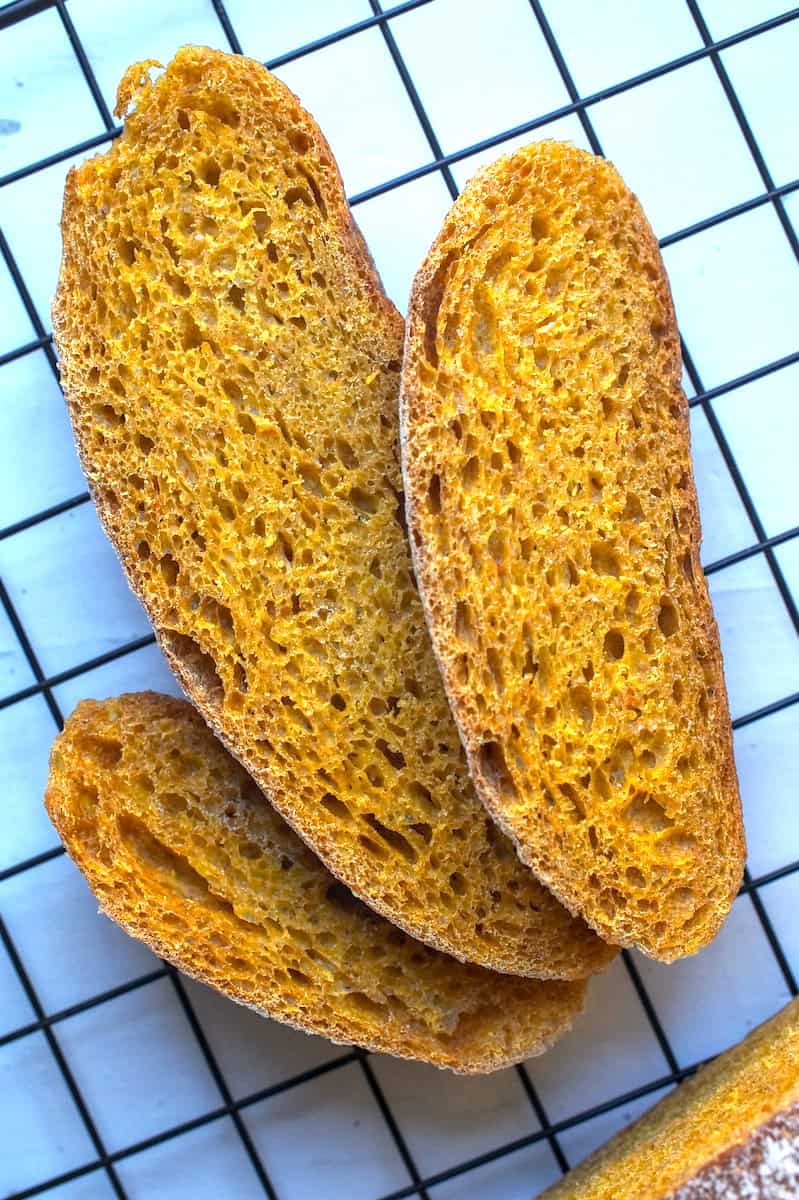
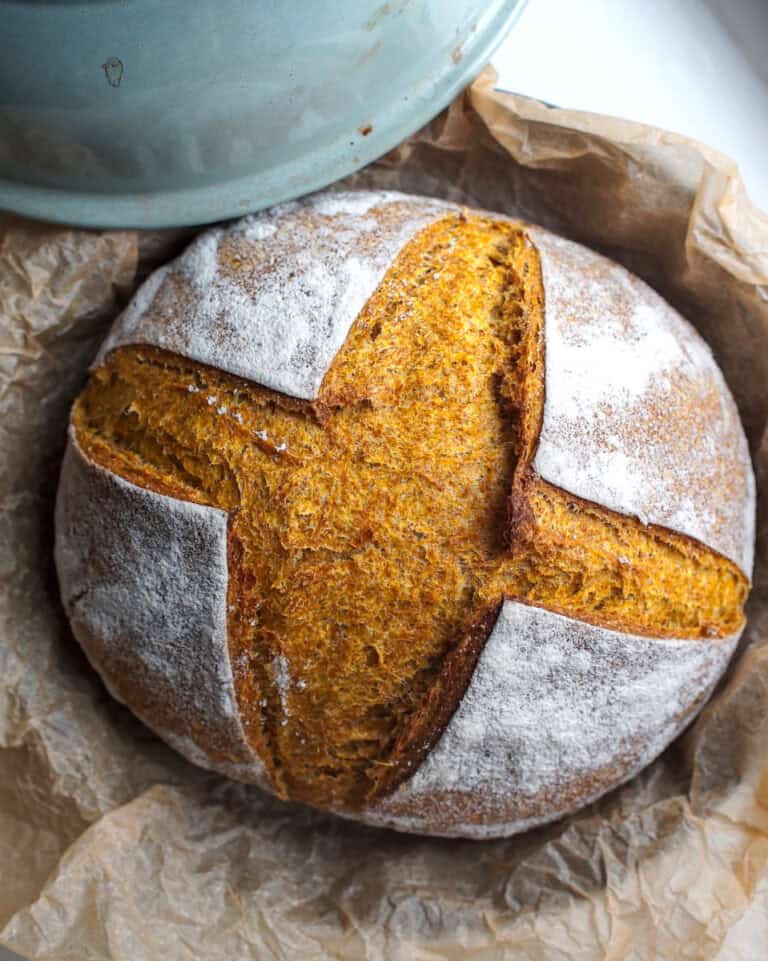
This pumpkin sourdough bread is a fall twist on traditional German whole wheat sourdough bread. It’s made with fresh-milled soft wheat flour and homemade pumpkin puree, for a crusty, European-style loaf.
This post may contain affiliate links. As an Amazon Associate, I may earn a small commission at no extra cost to you if you click through and make a purchase.


We’ve been obsessed with this seasonal twist on a traditional German whole wheat sourdough bread for weeks. It’s my four-year-old’s favorite, breakfast, snack and dinner. She’ll casually request a slice every night before bed, with butter, close-faced and crusts cut off (obviously).
But even if your palette leans more adult and less toddler (no judgement!), this fresh-milled sourdough bread tastes so good, both plain or toasted.
Including pumpkin puree means you can seamlessly switch between spelt and soft wheat, without the need for more involved techniques (like a tangzhong roux) to keep a spelt crumb soft. That’s the kind of flexibility I love most in a good sourdough bread recipe.
And even if working with homemade pumpkin puree means that nailing the right hydration can pose more of a challenge sometimes, please know that no matter how open or tight the crumb turns out, you’ll always be rewarded with an incredulously soft and flavorful bread.
If you’re into European sourdough bread, definitely check out my Whole Grain Soft-Wheat Sourdough Bread. It’s my base recipe for baking Europan-Style bread with whole grain soft wheat flour. If you want to dive deeper, you can find more information on how to bake bread with soft wheat flour in the full guide here →
(Spoiler Alert: Yes, you can totally bake bread with soft wheat flour.)
Why You’ll Love This Whole Wheat Sourdough Bread Recipe

Tools You May Need
Grain Mill (Optional) Freshly milled flour tastes best and preserves all the grain’s nutrients (but you can still bake lovely bread without it).
Stand Mixer (Optional) For the most efficient gluten development and a hands-off way to make this bread.
Banneton Basket and Linen Liner (Optional) A medium-large bowl or basket, lined with a clean tea towel will work in a pinch.
Dutch Oven (Optional) The easiest way to get a consistently great crumb and crust in any oven.
Bread Lame, Razor or Other Sharp Blade For scoring the proofed loaf for expansion (and decoration).
Ingredients & Substitutions
Fresh-Milled Flour For best taste, I recommend fresh-milled flour ground from whole soft wheat, spelt or any mix of the two. If you’re not milling at home (yet), swap in store-bought whole grain spelt flour, whole wheat flour (in Europe) or a whole wheat pastry flour with at least 10% protein (in North America).
Pumpkin Puree You can use homemade pumpkin puree or canned. Do NOT use pumpkin pie filling (it’s spiced and sweetened).
Sourdough Starter Use active and bubbly starter that’s been fed within the last 4-8 hours, for best results. If you keep your starter in the fridge, use fridge cold starter that’s been fed during the last 7 days.
Honey Swap maple syrup or brown sugar for vegan bread.
Baking Timelines
|
Feed your starter the night before so it’s active and bubbly in the morning. | |
|
08:00 AM |
Mill your grains and mix all ingredients into a shaggy dough. |
|
08:30 aM |
Knead the dough and bulk ferment at room temperature (or perform stretch and folds for the following 90 minutes). |
|
04:30 PM |
Shape the dough and place in a banneton. Proof at room temperature for 30–60 minutes. |
|
05:00 PM |
Preheat oven and dutch oven. |
|
05:30 PM |
Score your bread and transfer it to the hot dutch oven. Close the lid and bake. |
|
05:55 pm |
Take off the lid and keep baking. |
|
06:10 pm |
Remove the baked bread from the dutch oven and let cool. |
|
Feed your starter in the afternoon so it’s active and bubbly in at night. | |
|
09:00 pm |
Mill your grains and mix all ingredients into a shaggy dough. |
|
09:30 pm |
Knead the dough and bulk ferment at room temperature. |
|
06:30 am |
Shape the dough and place in a banneton. Proof at room temperature for 30–60 minutes. |
|
07:00 aM |
Preheat oven and dutch oven. |
|
07:30 aM |
Score your bread and transfer it to the hot dutch oven. Close the lid and bake. |
|
07:55 am |
Take off the lid and keep baking. |
|
08:10 am |
Remove the baked bread from the dutch oven and let cool. |
How to Make Pumpkin Sourdough Bread (Step-by-Step)
If you need more detailed step-by-step images, or instructions on how to make this whole wheat sourdough bread without a stand mixer, check out the instructions in my Whole Grain Soft Wheat Sourdough Bread recipe.


01
Mill Flour
Measure out whole wheat berries and grind them on the finest setting of your grain mill.
02
Mix and Autolyse
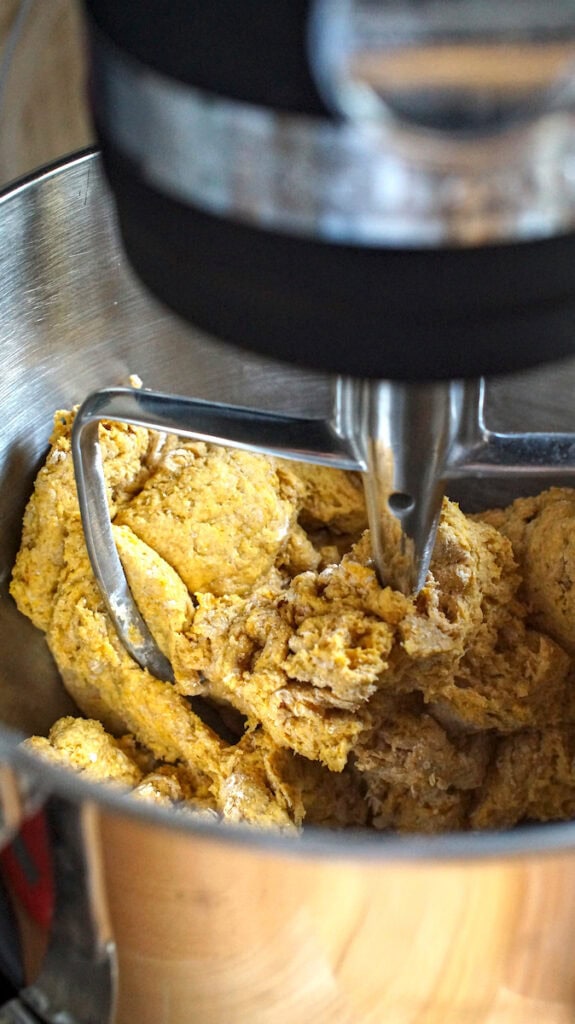
In the meantime, combine water, pumpkin puree, sourdough starter, salt and honey in the bowl of a stand mixer. Add the flour and use the paddle attachment to bring everything together into a shaggy dough, with no dry pockets hiding on the bottom of the bowl.
Cover and autolyse for 30-60 minutes.
03
Knead the Dough
Switch to the dough hook and knead for 07-10 minutes on the lowest speed. The dough will be a little tacky, but you should be able to gather it into a smooth, stretchy ball of dough that passes the windowpane test.
Cover the bowl, and bulk ferment for 6-8 hours, until domed, puffy, and roughly doubled in size.
04
Shape and Proof
When the dough has finished bulk ferment, prepare your banneton basket. Sprinkle some flour across the top of the dough and turn it out to a clean work top.
Gently pull the dough out into a rectangle. Fold the top third down, bottom third up, then fold the sides in towards the middle. Flip seam side down. Cup your hands around the dough and gently pull it toward you to build surface tension. Turn and repeat until taut.
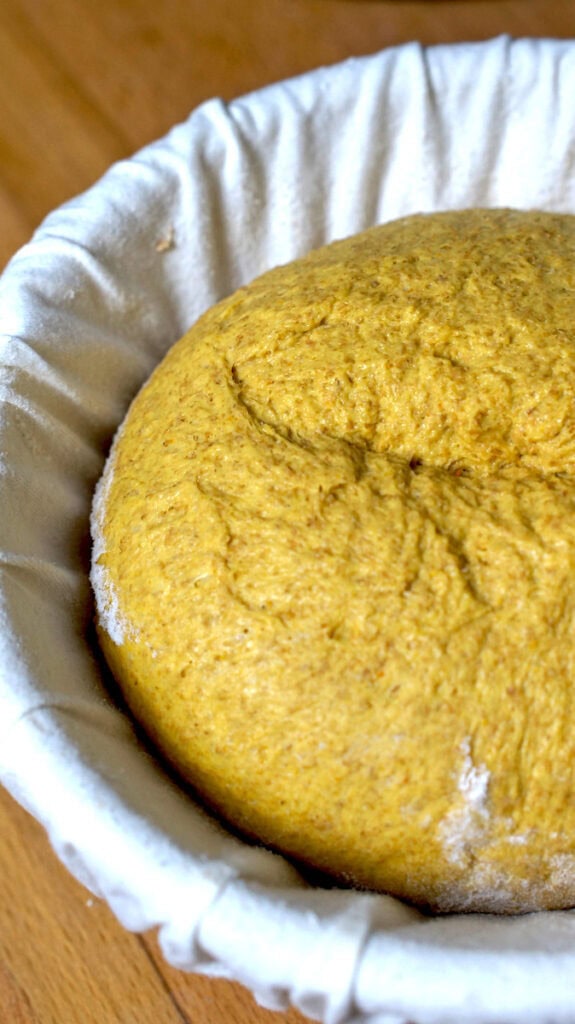
Place into your prepared banneton, seam side up.
Proof for 30 minutes at room temperature or in the fridge, to help the dough hold its shape.
05
Bake
Preheat your oven and dutch oven to 250°C (500°F) for 30-45 minutes.
Cover the banneton basket with a piece of parchment paper and flip it over gently. Score the top of the dough at a 45° angle down the middle or cross-wise. Carefully remove the lid from the hot dutch oven and lower the scored loaf into the pot. Cover and return to the oven.
Drop the temperature to 210°C (425°F) immediately. Bake for 25 minutes, take off the lid and bake for an additional 15 minutes.
06
Tap and Cool
Remove the baked bread from the dutch oven and place it on a cooling rack. It’s done if it sounds hollow when tapped on the bottom. Let cool for at least 1 hour (if you can wait that long).


Tips & Troubleshooting
- Homemade pumpkin puree can be a little unpredictable, but it’s usually a little wetter than canned. If you’re using canned, feel free to add 1 to 2 tablespoons additional water, if the dough seems too dry.
- Knead the dough in the stand mixer until it’s slightly tacky but comes together into a smooth ball. It should pass the window pane test. If you’re unsure of whether it’s sufficiently kneaded or not, feel free to perform one ore two rounds of stretch and folds, to get a hands-on feel for gluten development.
- If you’re baking with fresh-milled flour, avoid cold proofing in the fridge. Fresh flour speeds up fermentation, and it can over proof in the fridge in as little as 2 hours. I still like to move my dough to the fridge while the oven preheats, to help the dough hold its shape.
- If the dough feels slack during shaping, it may have over proofed. Feel free to skip scoring in that case. A rustically ripped crust will still look a lot better than a sad score that didn’t pop.
Variations to Try
How Homemade Pumpkin Puree May Affect the Crumb
Working with homemade pumpkin puree means that every loaf might be just a little different than the last.
Depending on the variety and ripeness of the pumpkin used, both water and fiber content can change. It means that there’ll be a natural variance in how open the crumb turns out.

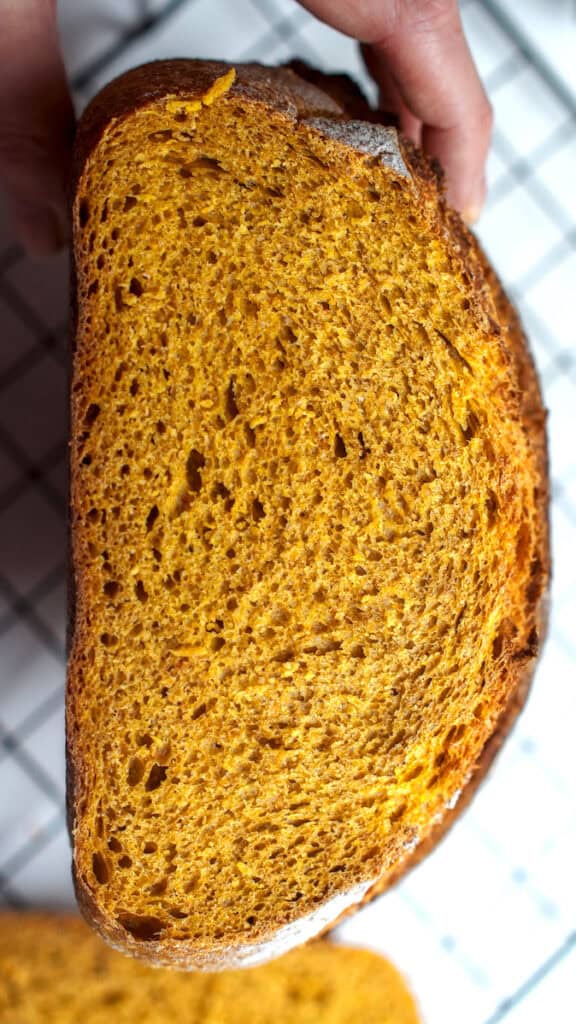


I’ve baked this loaf week after week, all through fall. Sometimes the crumb is a little more open, sometimes it’s a little more closed.
Always, it is the best loaf of bread I could possibly wish for.
This is a feature, not a bug.
It means you’re working with a healthy, natural ingredient. So don’t fret if one loaf is less perfect than another. You’ll always be rewarded with a deeply flavorful, super nutritious loaf of bread.
How to Serve
Soft wheat pumpkin sourdough bread is wonderfully versatile!
- Moist but sturdy, it stands up to any and all sandwich fillings you enjoy.
- Slice it thick and dunk in hot soup. So good.
- Build a German Brotzeit around it, with butter, deli meats, cheeses, jams and hearty spreads.
- Or turn it to the simplest of pleasures, with a schmear of butter and a sprinkling of salt.
How to Store & Freeze
At Room Temperature
Keep the loaf wrapped airtight at room temperature for up to three to four days.
In The Freezer
- Slice pumpkin sourdough bread into even slices and separate them with a piece of parchment paper. Wrap in a freezer bag and press out as much air as you can. Store in the freezer for up to three months.
- If you prefer baking in bulk, you can double the recipe and freeze a whole loaf as well, wrapped air-tight.
To Thaw
You can toast single slices straight from frozen or set out a whole loaf to thaw at room temperature overnight.
Recipe FAQs
If you make this whole wheat Pumpkin Sourdough Bread…
I’d love to hear how it turned out!
happy baking!

Fresh-Milled Whole Wheat Pumpkin Sourdough
Equipment
- grain mill (optional)
- stand mixer (optional)
- banneton basket and liner (Optional)
- bread lame, razor or other sharp blade
Ingredients
- 500 g fresh milled soft wheat or spelt flour - (milled from ~ 2½ cups whole soft wheat berries) see Ingredients Notes to choose a store-bought alternative
- 110 g sourdough starter, active and bubbly - (½ cup)
- 12 g salt
- 20 g honey - (1 tbsp) sub maple syrup or brown sugar
- 170 g pumpkin puree - (⅔ cup) homemade or canned
- 270 g water - (1 cup + 2 tbsp)
Instructions
Mill Flour
- Measure out whole wheat berries and grind them on the finest setting of your grain mill.500 g fresh milled soft wheat or spelt flour
Mix and Autolyse
- In the meantime, combine water, pumpkin puree, sourdough starter, salt and honey in the bowl of a stand mixer. Add the flour and use the paddle attachment to bring everything together into a shaggy dough.110 g sourdough starter, active and bubbly, 12 g salt, 170 g pumpkin puree, 270 g water, 20 g honey
- Cover and autolyse for 30-60 minutes.
Knead the Dough
- Switch to the dough hook and knead for 07-10 minutes on the lowest speed. The dough will be a little tacky, but you should be able to gather it into a smooth, stretchy ball of dough that passes the windowpane test.
- Cover the bowl, and bulk ferment for 6-8 hours, until slightly domed, puffy, and roughly doubled in size.
Shape and Proof
- When the dough has finished bulk ferment, prepare your banneton basket.
- Sprinkle some flour across the top of the dough and turn it out to a clean work top. Gently pull the dough out into a rectangle. Fold the top third down, bottom third up, then fold the sides in towards the middle. Flip seam side down. Cup your hands around the dough and gently pull it toward you to build surface tension. Turn and repeat until taut.
- Place into your prepared banneton, seam side up. Proof for 30 minutes at room temperature or in the fridge, to help the dough hold its shape.
Bake
- Preheat your oven and dutch oven to 250°C (500°F) for 30-45 minutes.
- Cover the banneton basket with a piece of parchment paper and flip it over gently. Score the top of the dough at a 45° angle down the middle or cross-wise. Carefully remove the lid from the hot dutch oven and lower the scored loaf into the pot. Cover and return to the oven.
- Drop the temperature to 210°C (425°F) immediately. Bake for 25 minutes, take off the lid and bake for an additional 15 minutes.
Tap and Cool
- Remove the baked bread from the dutch oven and place it on a cooling rack. It’s done if it sounds hollow when tapped on the bottom. Let cool for at least 1 hour (if you can wait that long).
Notes
- Homemade pumpkin puree can be a little unpredictable, so feel free to add 1 to 2 tablespoons additional water, if the dough seems too dry.
- If you’re baking with fresh-milled flour, avoid a long cold proof in the fridge. Fresh flour can over proof in the fridge in as little as 2 hours.
- If the dough feels slack during shaping, it may have over proofed. Feel free to skip scoring in that case. A rustically ripped crust will still look a lot better than a sad score that didn’t pop.
- Keep the loaf wrapped airtight at room temperature for up to three to four days.
- Wrap in a freezer bag as a whole loaf or evenly sliced, and freeze for up to three months. You can toast single slices straight from frozen or set out a whole loaf to thaw at room temperature overnight.








)